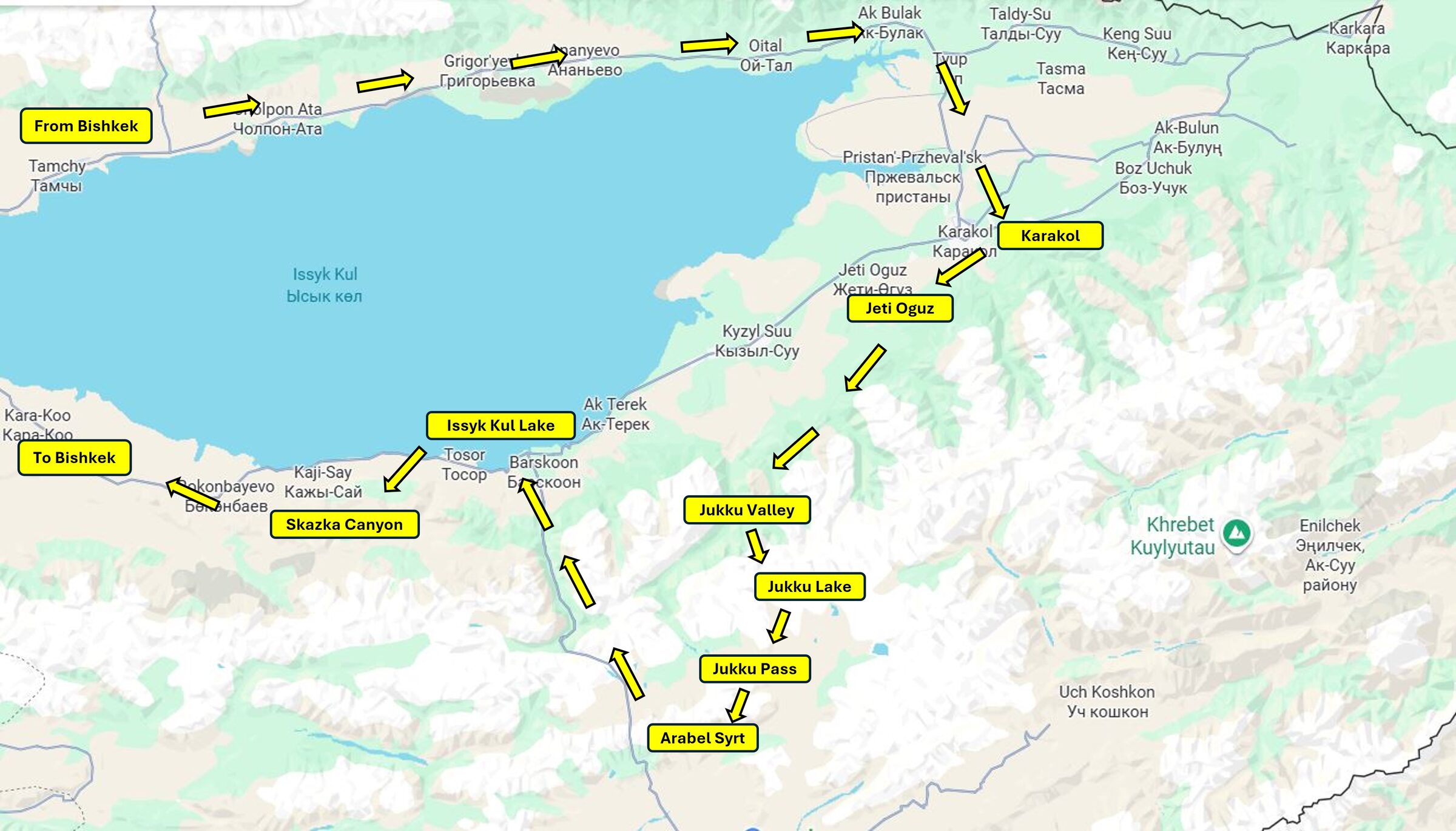
Itinerary: Bishkek, Issyk Kul Lake, Jailoo Kyzyl Suu, Jukku
Valley, Jukku Lake, Jukku Pass, Arabel Syrt, Skazka Canyon
Highlights: If you want to get away from the crowds, travel
the historical Silk Road and spend some time in the wilderness then Kyrgyzstan
is the place for you.
The itinerary, travel, accommodation and food for this trip
was all organised by Much
Better Adventures and we booked onto a public tour with 8 other travellers
having seen it advertised on their website. Theoretically you could organise
this trip yourself and save some money, but you would need a company to
transport your luggage, or you’d have to carry everything (including camping
gear) yourself. After the trip, I was asked to write a short review
of my time in Kyrgyzstan by Much Better Adventures based on some of the photos
I submitted a few weeks later.
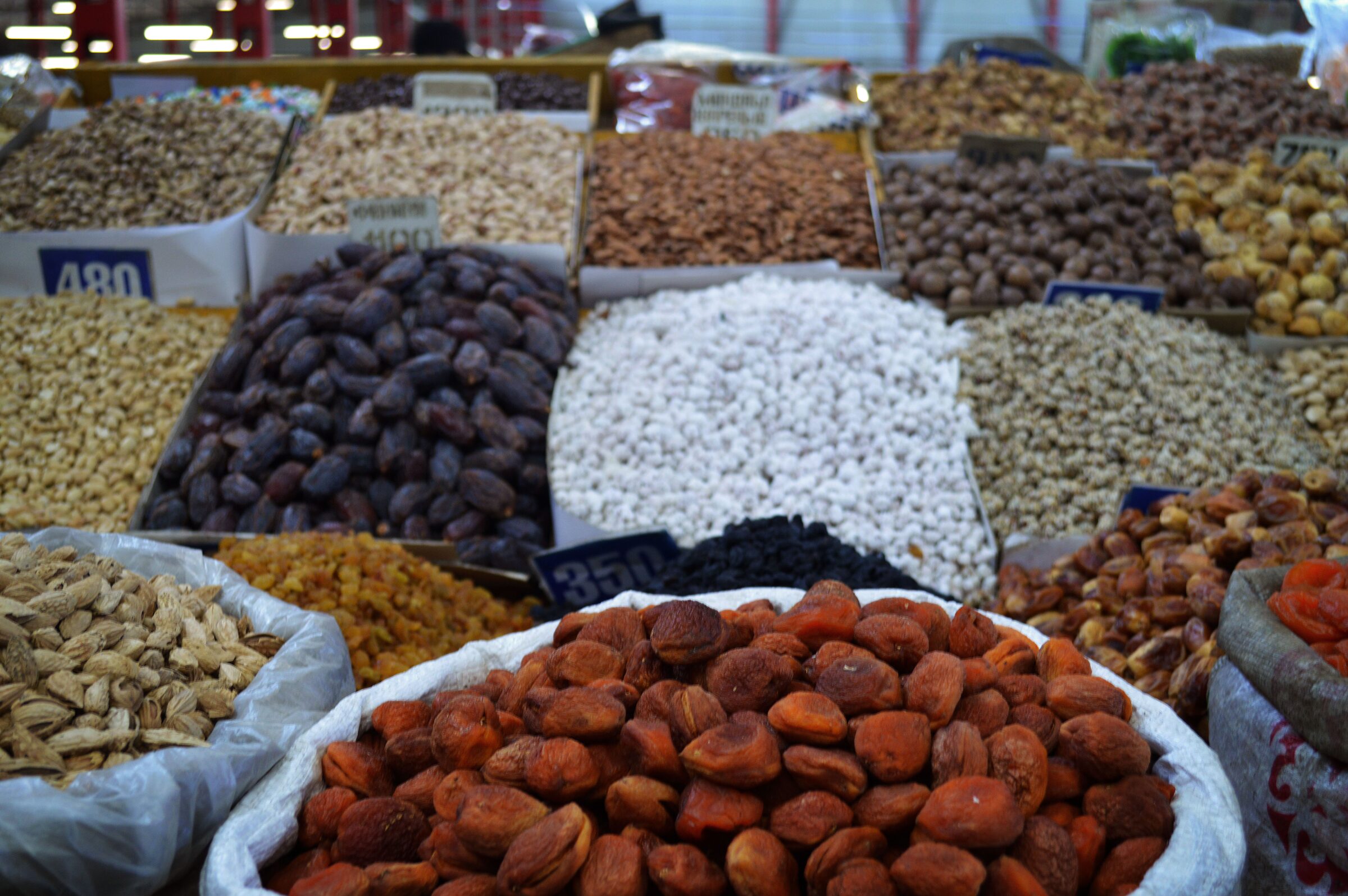
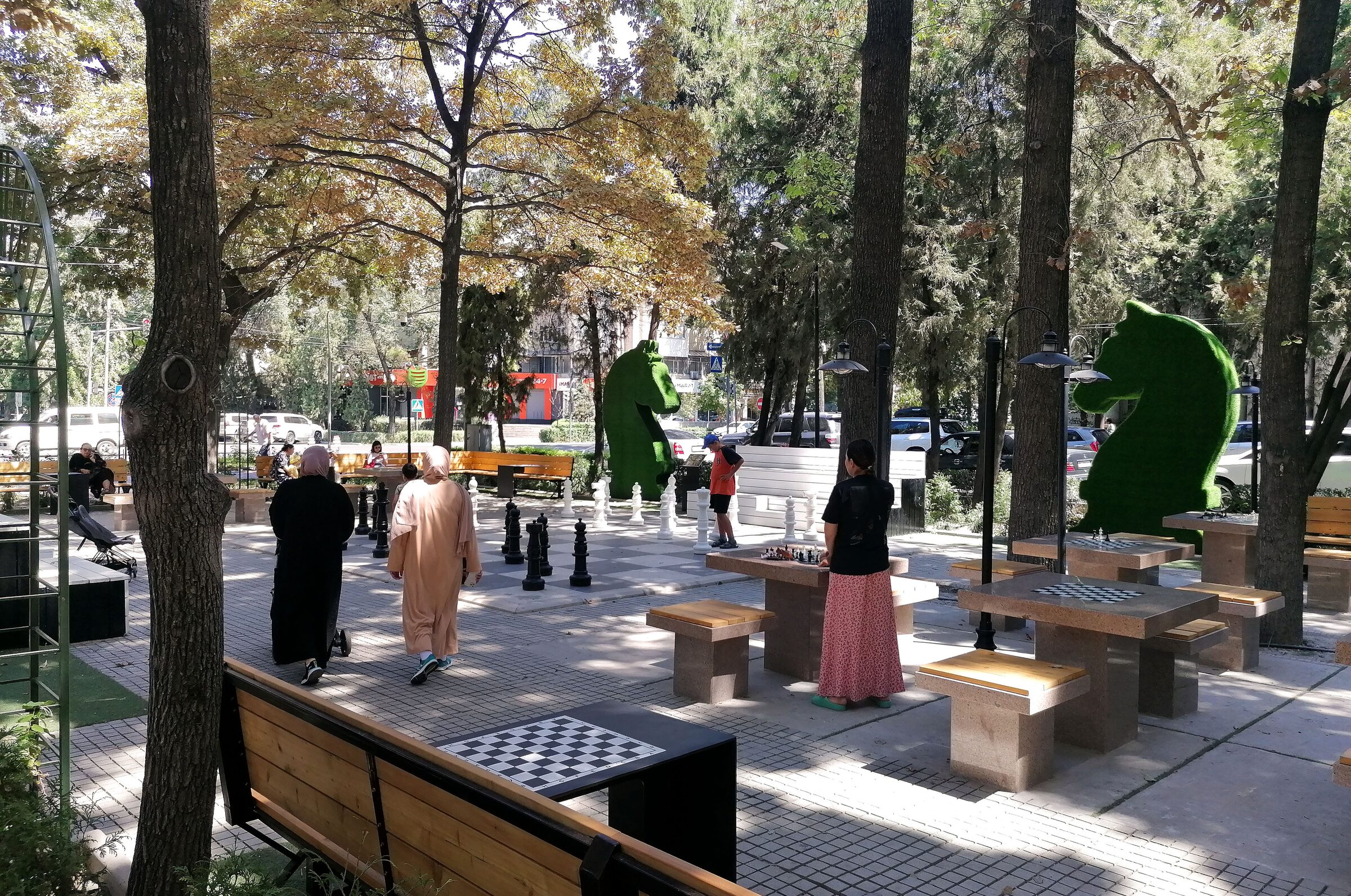
ItineraryOsh Bazaar Bishkek street chess
We flew to Bishkek and spent our first day walking the
streets of this once communist country, wandering around garden parks and old
USSR plazas, gazing at the large stone statues of former war heroes. Ala Too Square and the
surrounding area has parks and museums in a similar layout to other
ex-communist-capital-cities, all in easy walking distance including the
spectacular State History Museum
building (£1.50 entry fee). The Osh Bazaar (a 40-minute walk from the square)
is a lively market full of spices, produce and Chalap, a Kyrgyz fermented
drink made with sour milk and salt which is not the greatest things I've ever tasted. We
wandered the stalls and meat markets until we’d seen enough produce for the day
and then headed to our accommodation for the night.
Dungan Mosque Konorchek Canyon
We set off on our adventure in the minibus having met our fellow
travellers and two Kyrgyz guides and we headed for Dungan Mosque, a
delightfully pretty bright-blue-building with interesting artwork on the solar
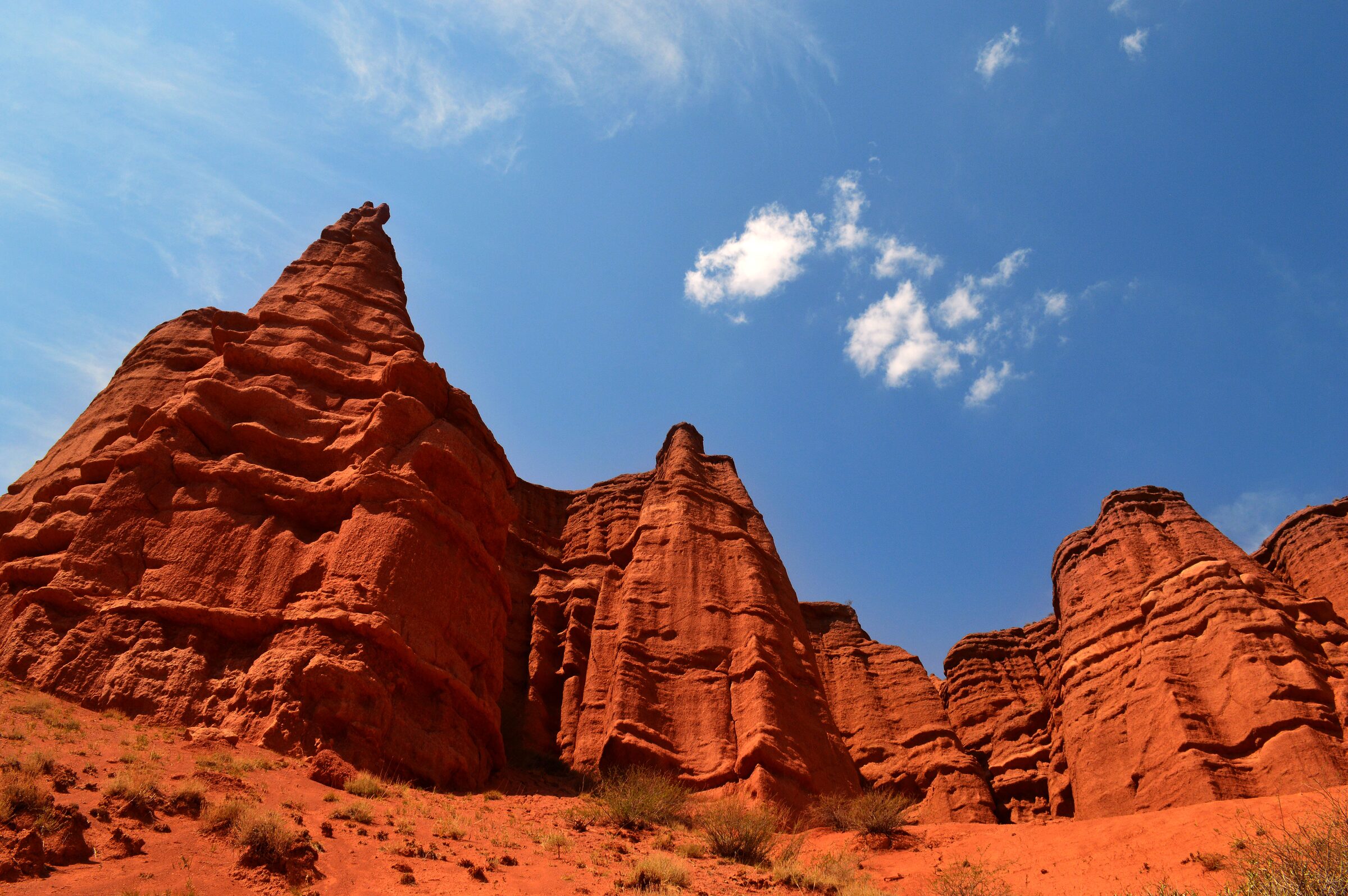
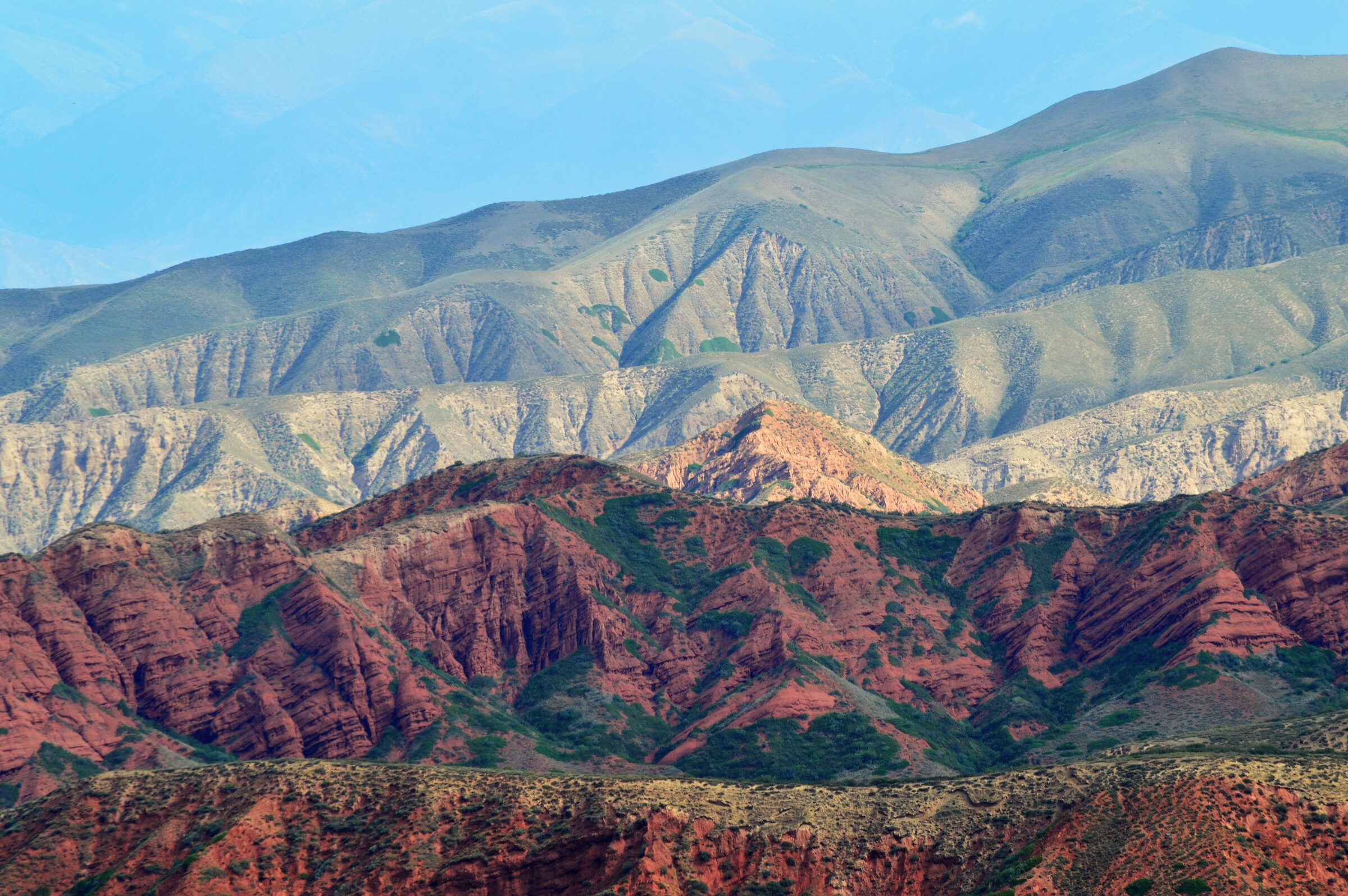
system in the entrance hall. A short hike through the Konorchek Canyon with its
bright orange sandstone rocks stretching up to the clear blue sky was next
before bedding down at a guesthouse on the eastern shore of Issyk Kul Lake, the
second largest mountain lake in the world (behind lake Titicaca, Peru /
Bolivia). The next day involved a visit
to the Orthodox church in Karakol before heading to the Jety Oguz valley where
our trek began. For any winter adventurers, Karakolis also a ski
resort in the colder months.
Evening yurtMorning view
The first hiking day was a scenic 18km walk through the Jety
Oguz valley with vibrant the orange rockface including the famous 7 Bulls
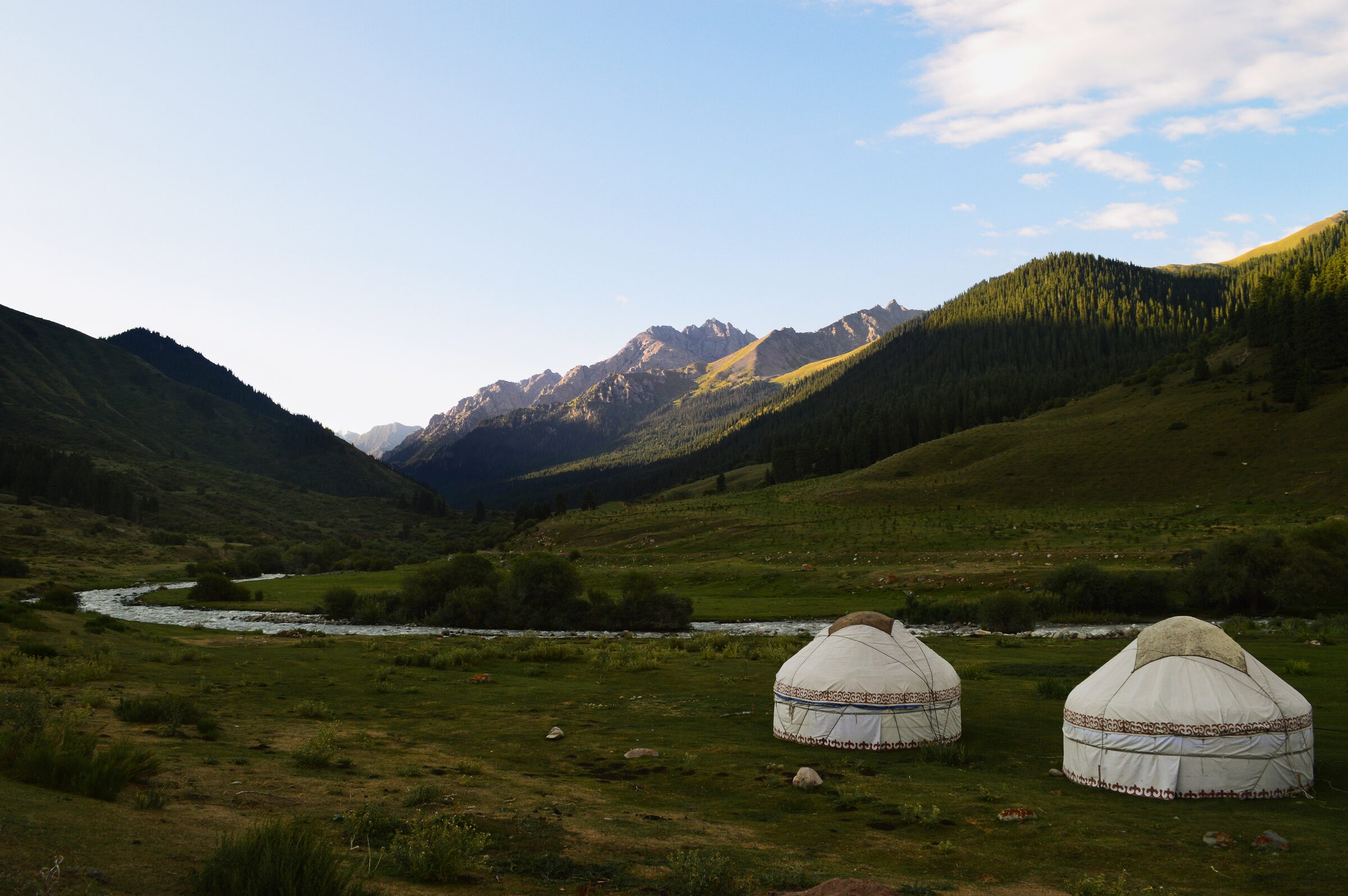
formation culminating in an overnight stay in a yurt. Semi-nomadic farmers (so
called as they spend half the year in the mountains and the other half at lower
altitude) build yurts the Kyrgyz way (a technique we learned about later in the
trip) and put us up for the night after an incredible family feast including
drinking and a sing-a-long. The camp was built on a river and a home-made sauna
had been erected for our stay which turned out to be the last chance for a
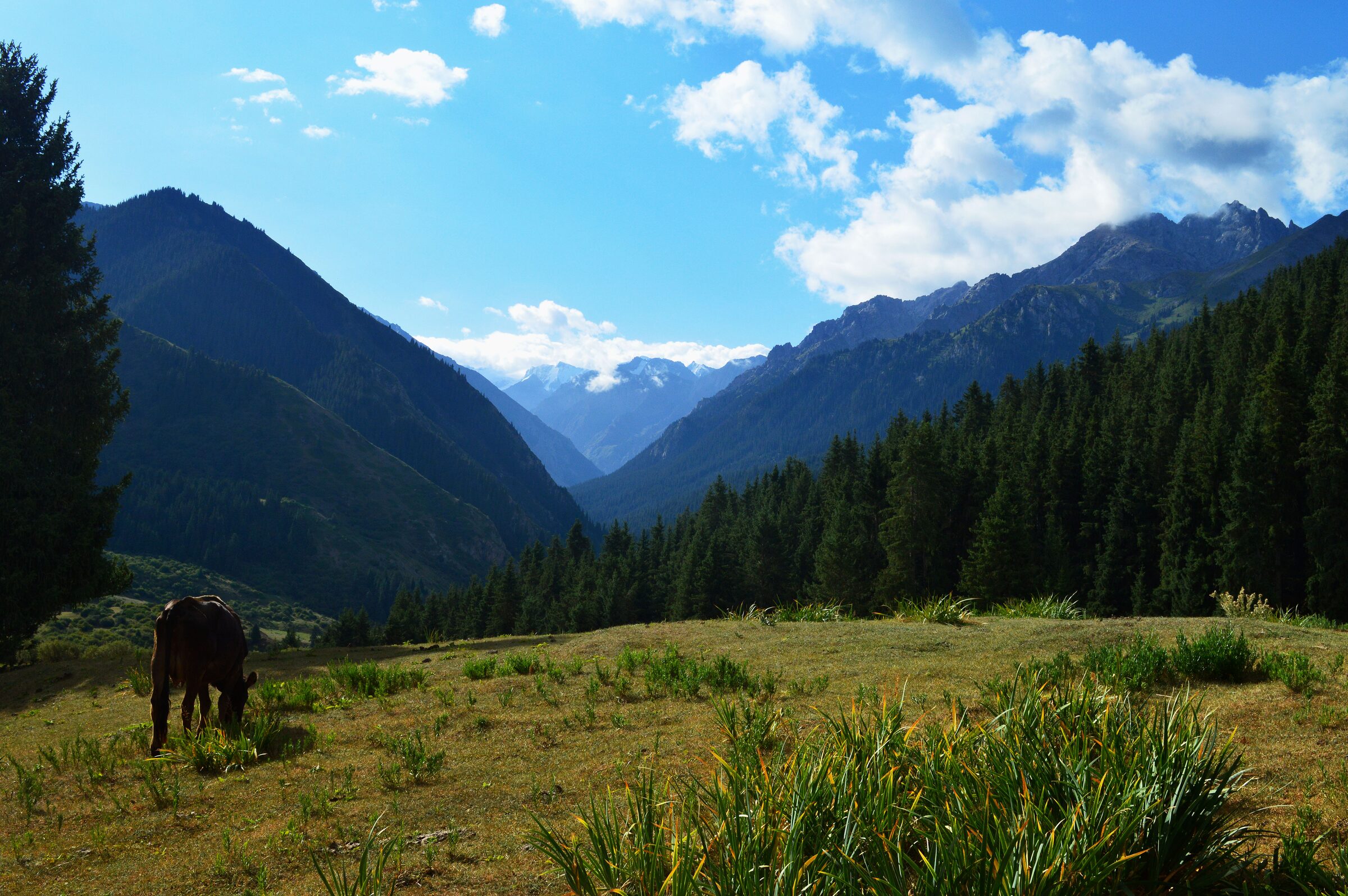
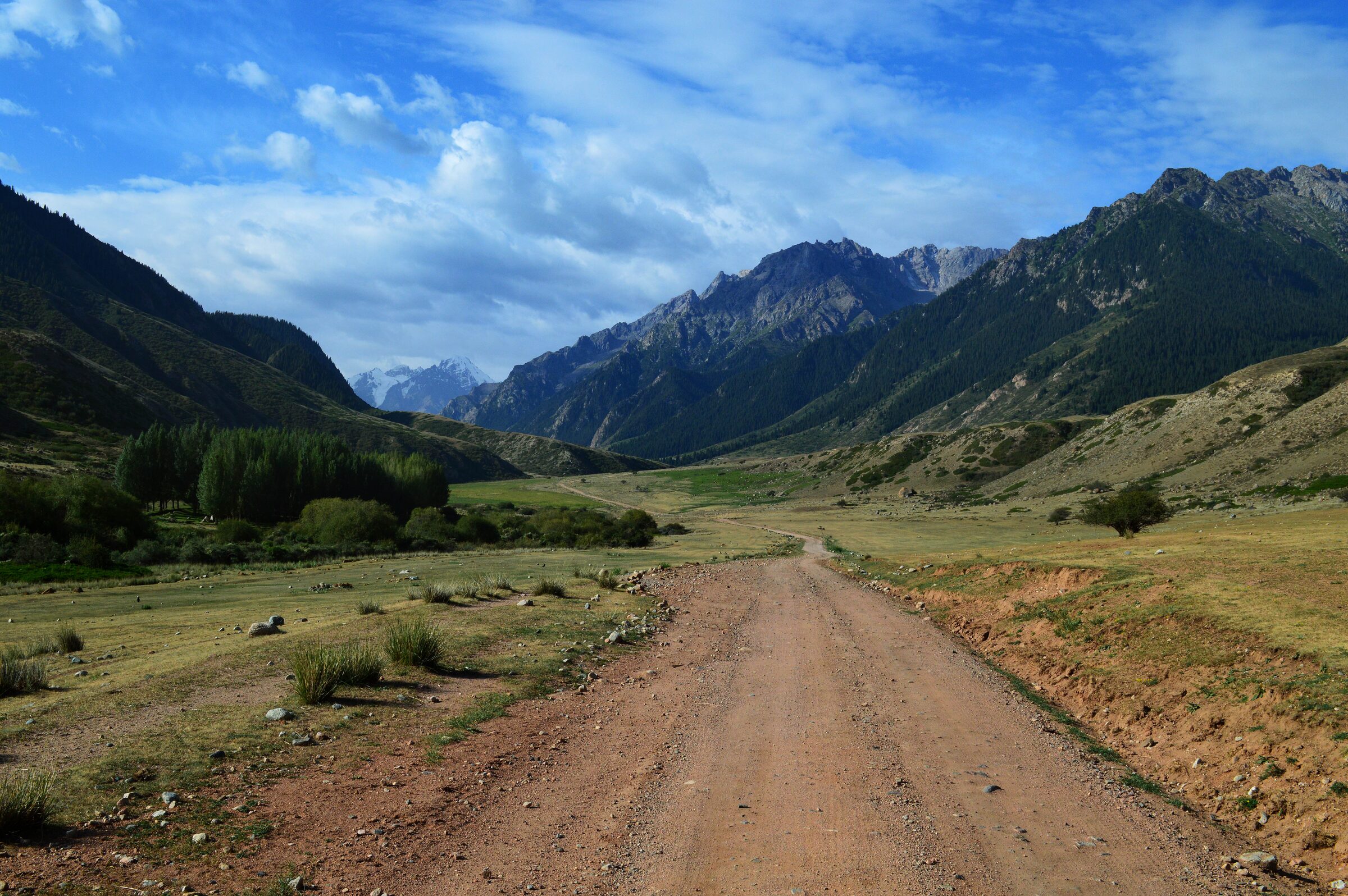
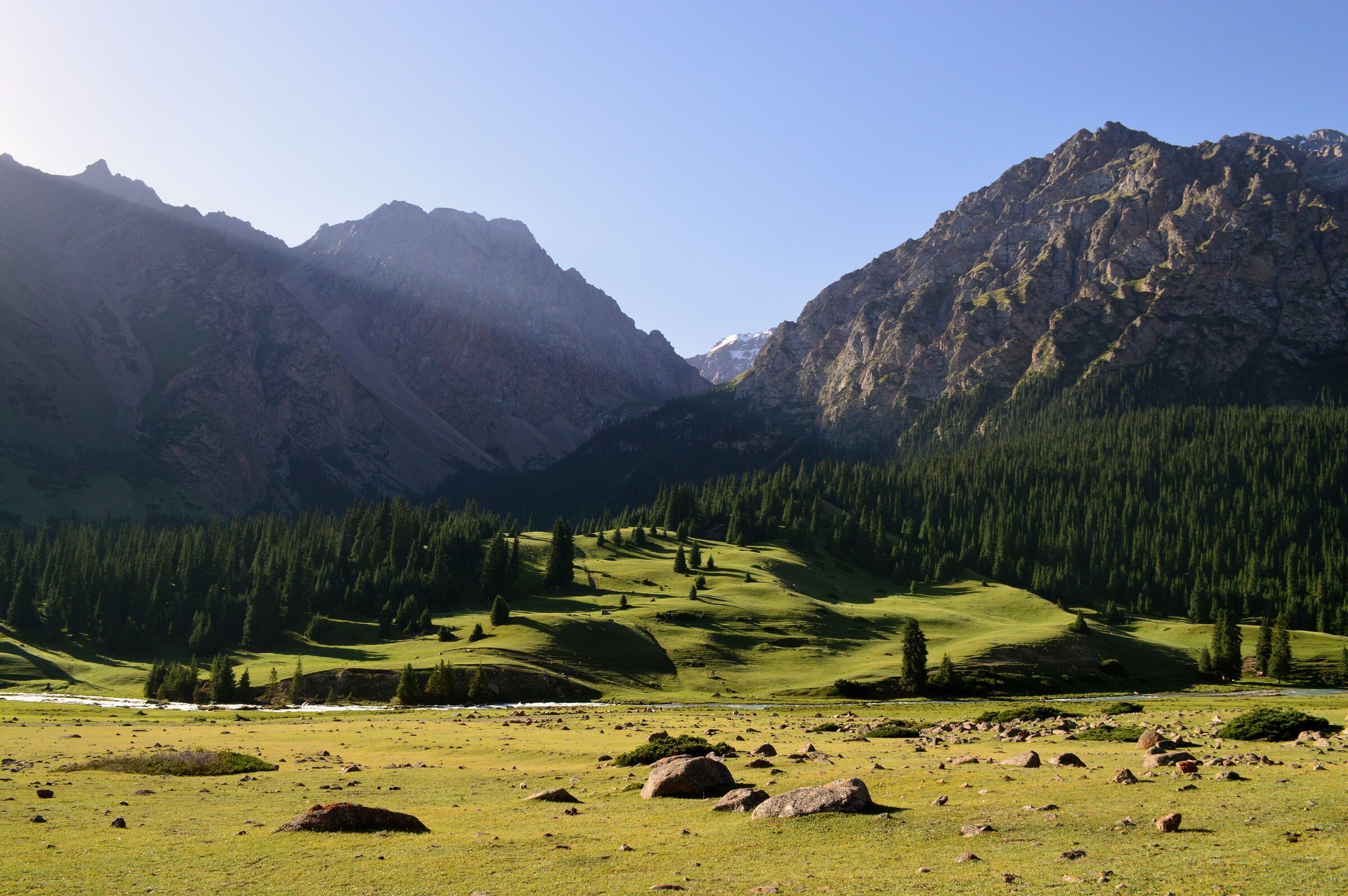
proper wash for 5 days. The second day brought with it a stunning hike (22km) across
the Jailoo Kyzyl Suu and through the Jukkuchak Valley, starting with an easy
walk along the river once followed by numerous empires travelling the silk road
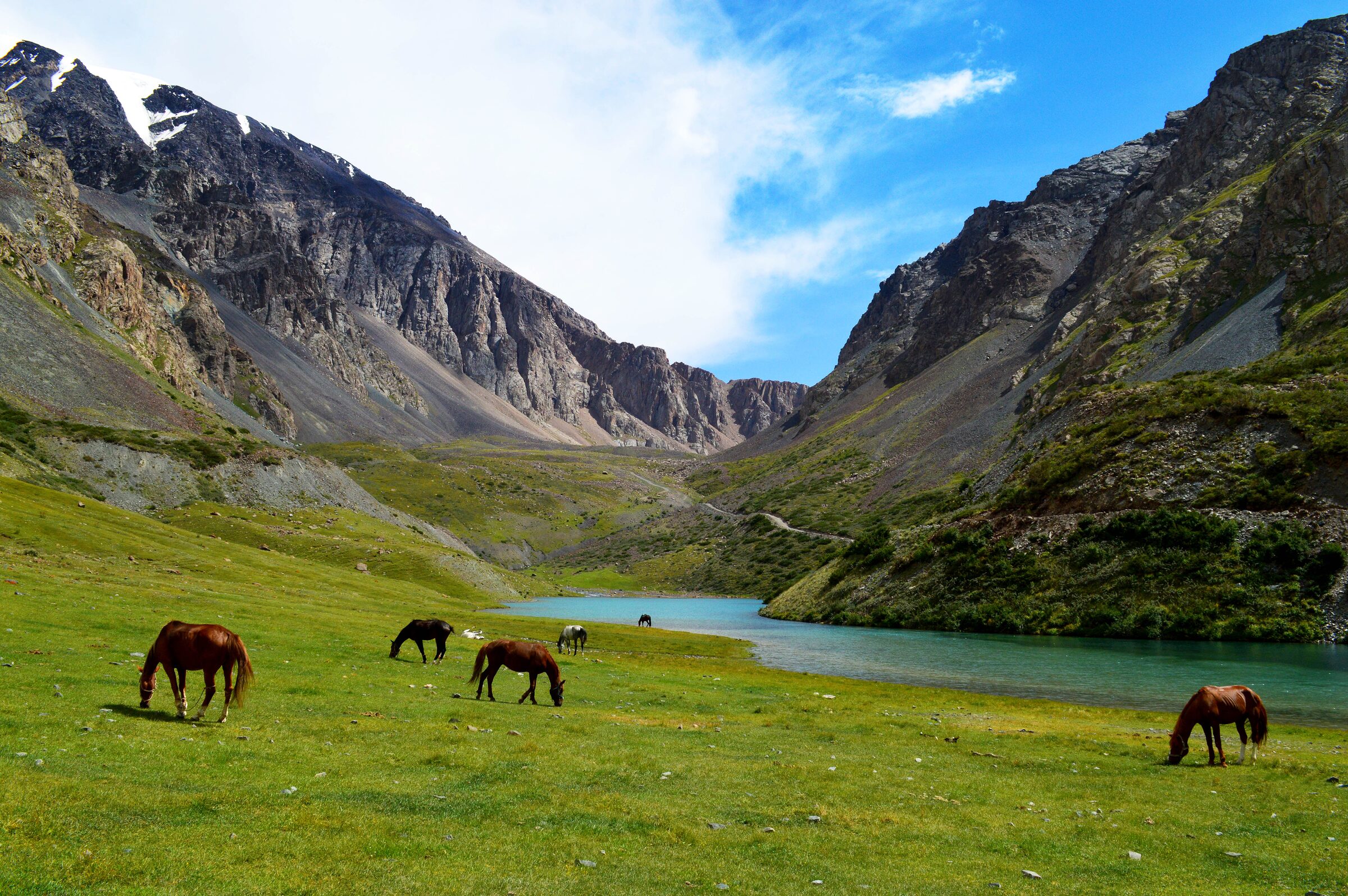
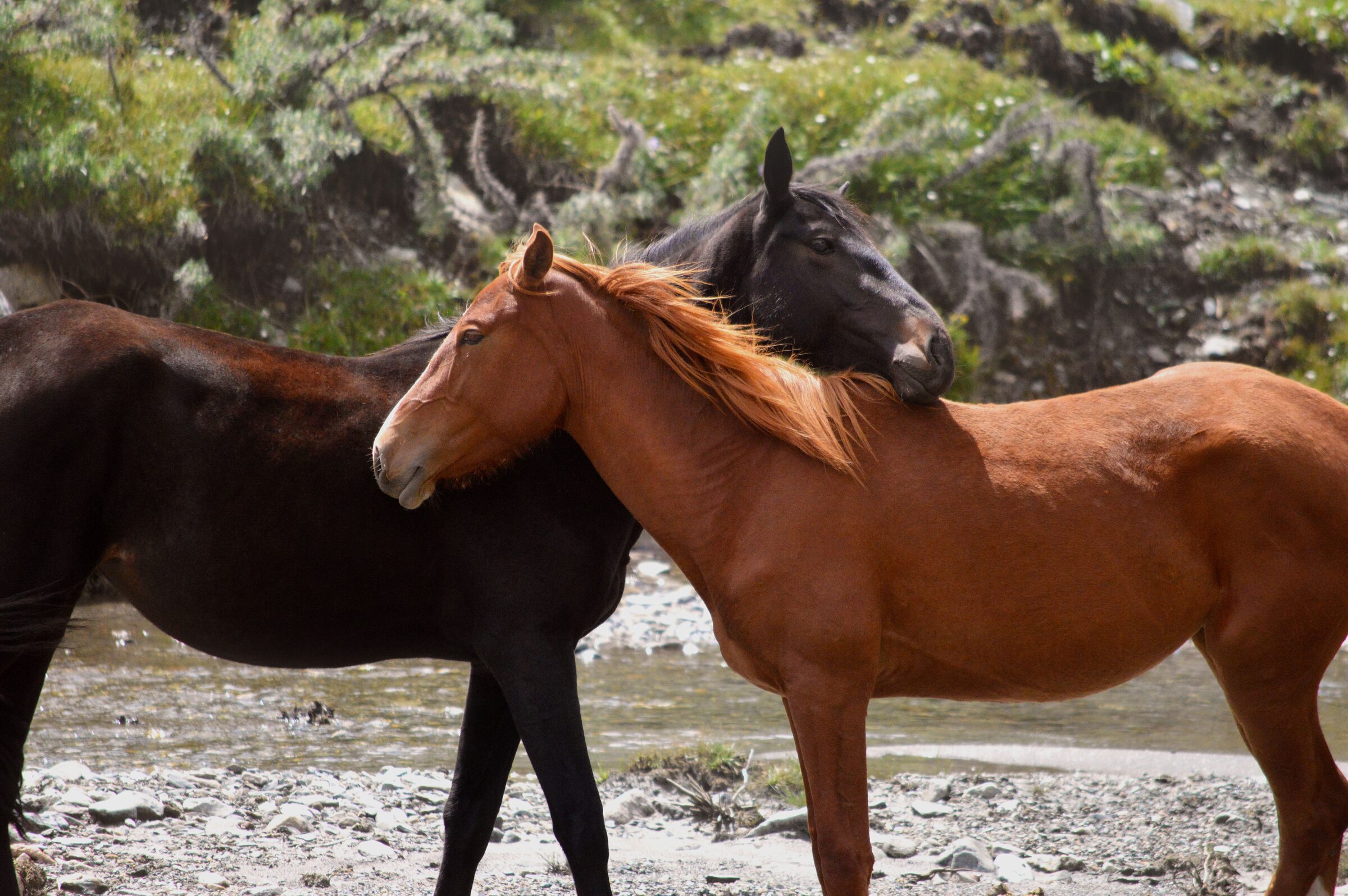
over the centuries. Wild horses roam this breathtaking scenery. The tops of the
Tian Shan range regularly peak above 7000m and you can see the snow-capped
mountains as you walk through the valley alongside the river in stunning
detail. The day ends with the first wild camping spot next to the river we
followed all day. No sauna this time though…
Colourful Tian Shan mountainsWild horsesSilk road
The next two days involve hiking from 2240m altitude to
3640m across the Jukku Valley and beyond the Jukku Lake (35km in total) with
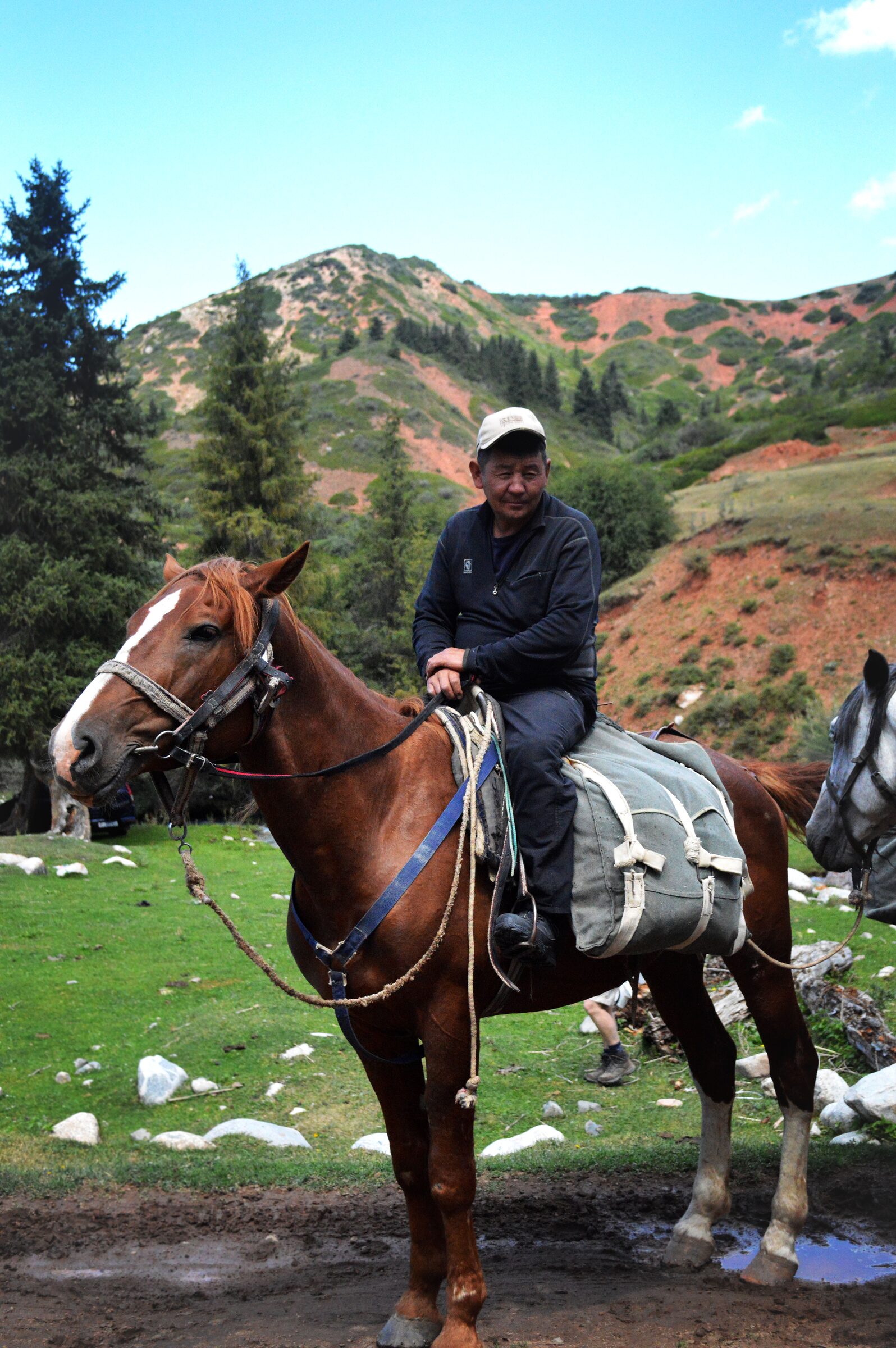
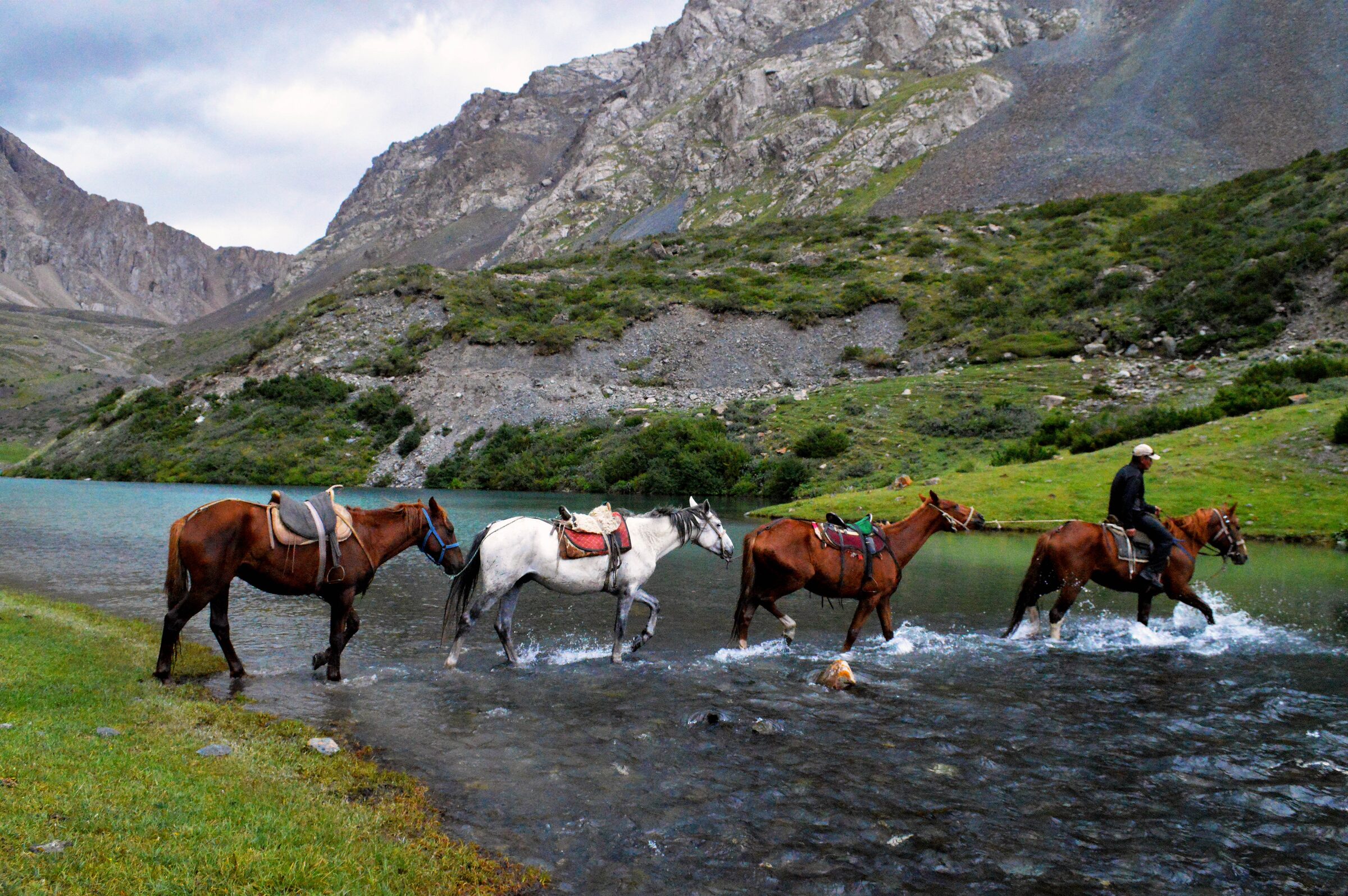
two different wild campsites for you to set up and take down. While a caravan
of horses carry your camping gear and luggage, you get to wander the stunning
silk road in all it’s beauty. This has to be some of the most incredibly
beautiful scenery I’ve ever had the pleasure of viewing, and hiking through it
constantly leaves you with a feeling of nostalgia as you tread the footsteps of
centuries of travellers before you. You can feel the history. Arriving at the
Jukku Lake, we rode on horseback to reach our final campsite, crossing a narrow
part of the lake to get to a better camping ground. Despite the windy weather the
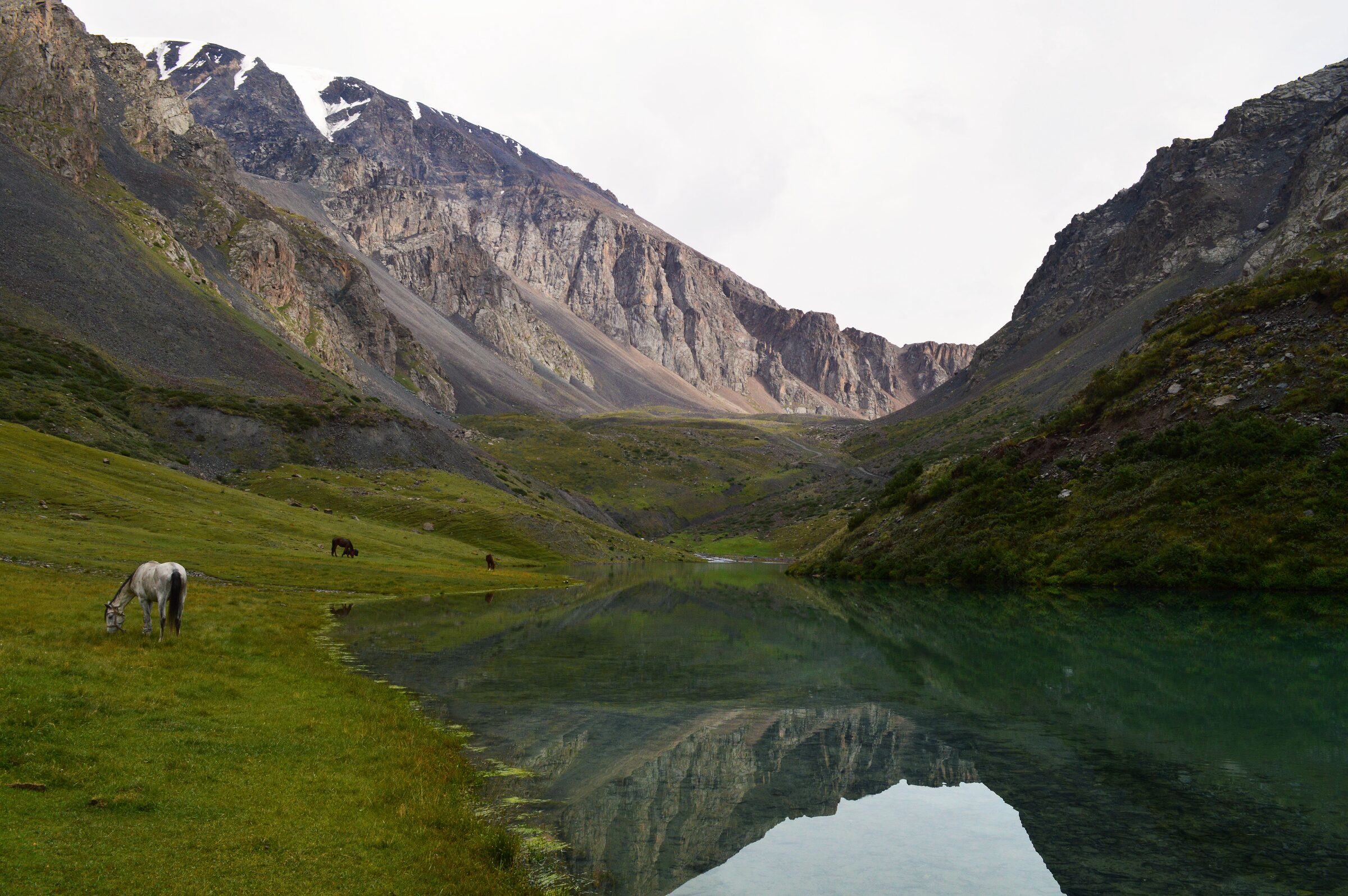
very moment we set up camp, 15 minutes later the view from the tent was the
best I’ve ever seen. Jukku Lake and the surrounding scenery is very, very
special but also very, very cold. Aside from our group of travellers, we were
very much completely alone in this incredible wilderness.
Horse master
Crossing Jukku LakeJukku Lake
The final big hiking day saw us scale to the top of the
Jukku Pass (12km, 4000m) where the gorgeous Arabel Syrt plateau is visible
from your hastily erected tent. Camping at 3700m is cold but this was the last
night of our wild camping and the hike to the top had been totally worth it. At
this point in the trip, the weather was very changeable (as with all mountain
regions) and the altitude did have some affect on breathing (anything above
2500m starts to cause altitude sickness) so beware of the difficulty of this
trip, especially at the end. However, the 5 days of hiking and 4 nights of wild
camping was an incredible experience which ended with a bus trip down the
mountain and a shower at a guesthouse, followed by a traditional Kyrgyz sauna
massage where basically you get hit with a large tree branch while sweating out
every drop of liquid your body has ever held. Glorious.
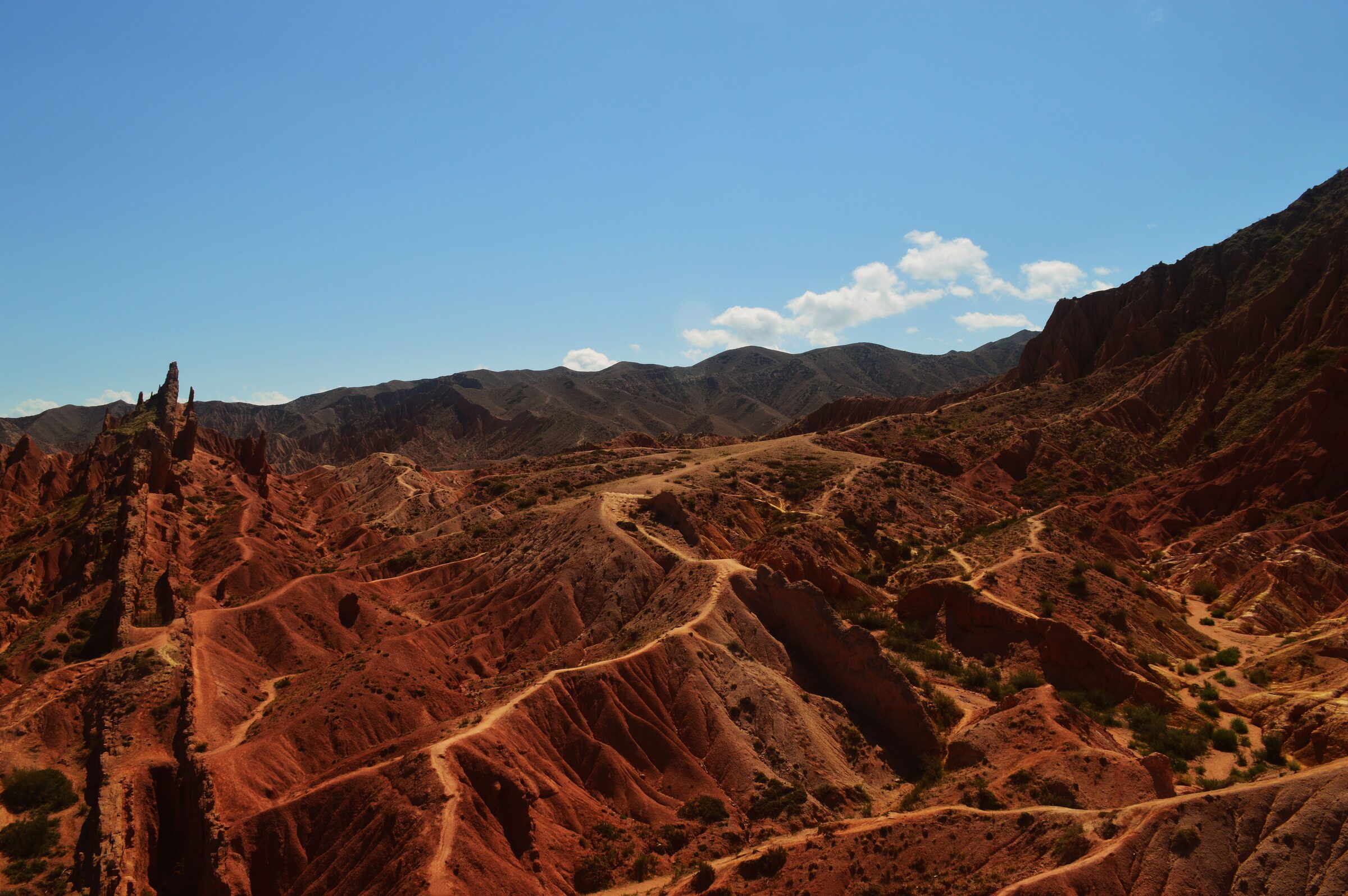
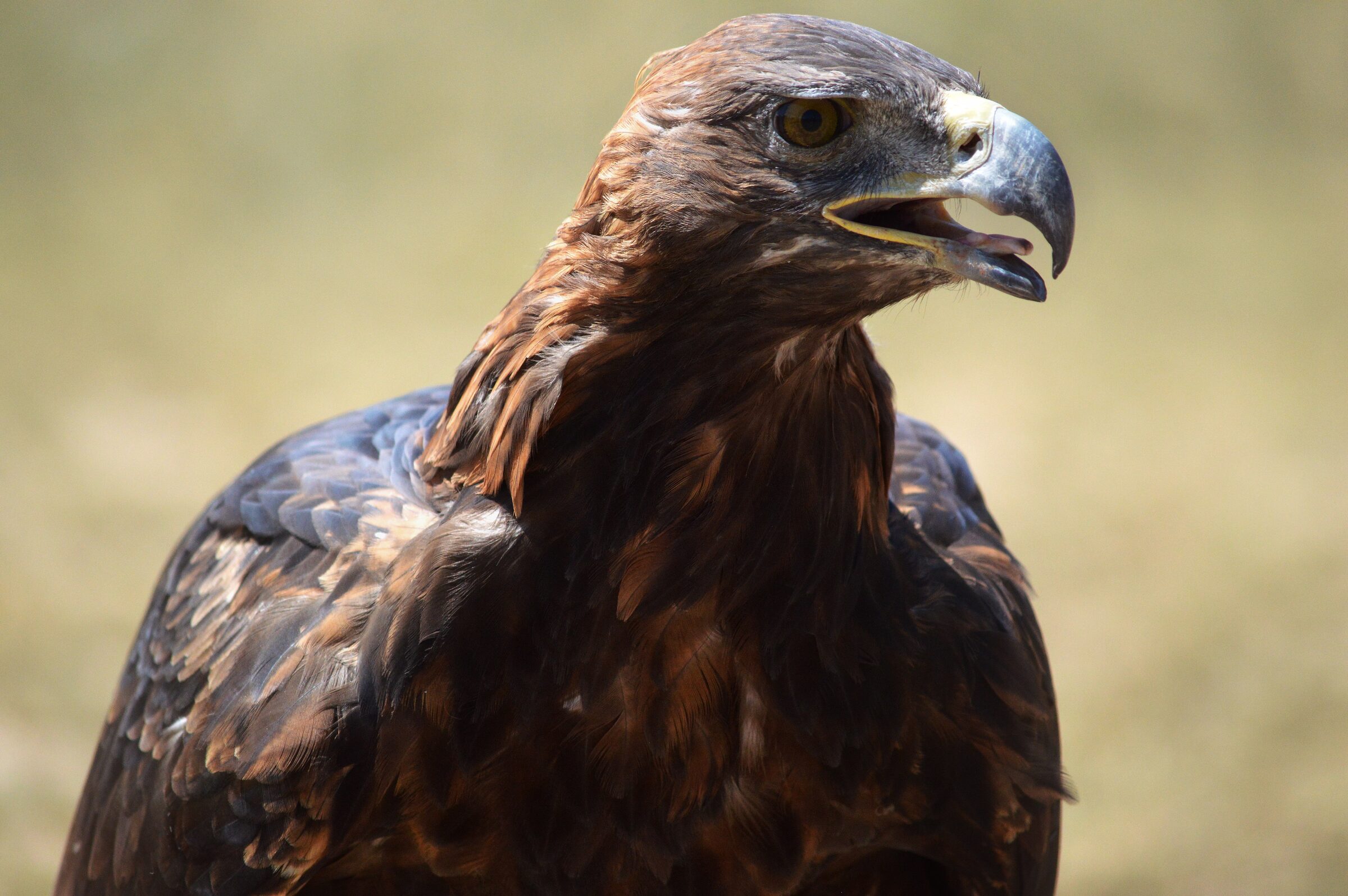
Fairytale Skazka CanyonGolden Eagle
The final day was possibly our favourite. It started
with an early morning swim in Issyk Kul Lake which had quite honestly the best swimming
view I’ve ever experienced. You could see the snow-covered tops of the Tian
Shan mountains some 2000m up, the bright orange sandstone rock and the gleaming
blue of the lake and sky shimmering in the distance whilst bobbing around in 20°C
water. We then hiked the fairytale Skazka Canyon where legend has it, a
sleeping Dragon was laid to rest, and you can see why with the long, jagged, scale-like
rock formations in amongst the wind-swept sandstone outcrops. Afterwards, we
met Aitbek and his family of Berkutchy (Kyrgyz Eagle hunters) and saw (first-hand)
how they used Golden Eagles to hunt prey in an incredible display of control. We
even got to hold one (Eagle, not Aitbek). After a quick archery match dressed
in traditional Kyrgyz outfits, we went to see how the traditional Kyrgyz yurt
builders build their yurts in a small village before heading back to Bishkek on
the bus. A day of delightful and interesting Kyrgyz cultural activities, all
tied together with a short video made by Joanna Lumley (weirdly) from 2019 on
her Silk Road documentary.
We experienced Kyrgyzstan as part of an organised trip with
other people (which was fabulous I might add) and I know we wouldn’t have been
able to access the culture, nature and scenery without our fabulous guides and
the itinerary built by Much Better Adventures. It was a different type of travelling for us
but we really got to know Kyrgyzstan, the people and the environment better
than we could have if we’d done it ourselves. Kyrgyzstan is a wonderful place
to get away from the (silk) road most travelled and over time as the infrastructure
around Issyk Kul Lake in particular is improved; it will only become a more and
more popular destination for travellers. Use our advice or not, remember: it’s
what you know, not who you know.