Highlights: Albania; the place for sun lovers, interesting history and
one of Europe’s greatest hikes.
Having had the pleasure of traveling to this wonderful
country twice with a 7-year gap between visits; I can honestly say it is one of
the most intriguing and delightful places in Europe. People flock to Croatia,
Greece and Italy every year and Albania is slap-bang in the centre of it all
which brings with it all the culture, food and scenery that the more ‘popular
kids’ have. In the seven-year gap, the infrastructure for tourists has improved
dramatically and the number of people visiting has nearly doubled so ‘Europe’s
best kept secret’ is no longer. The itinerary below is what we followed in 2024
but the additions of Durrës, Vlorë, Sarandë and Corfu (Greece) could easily be
added on with an extra 4-or-5-days travel.
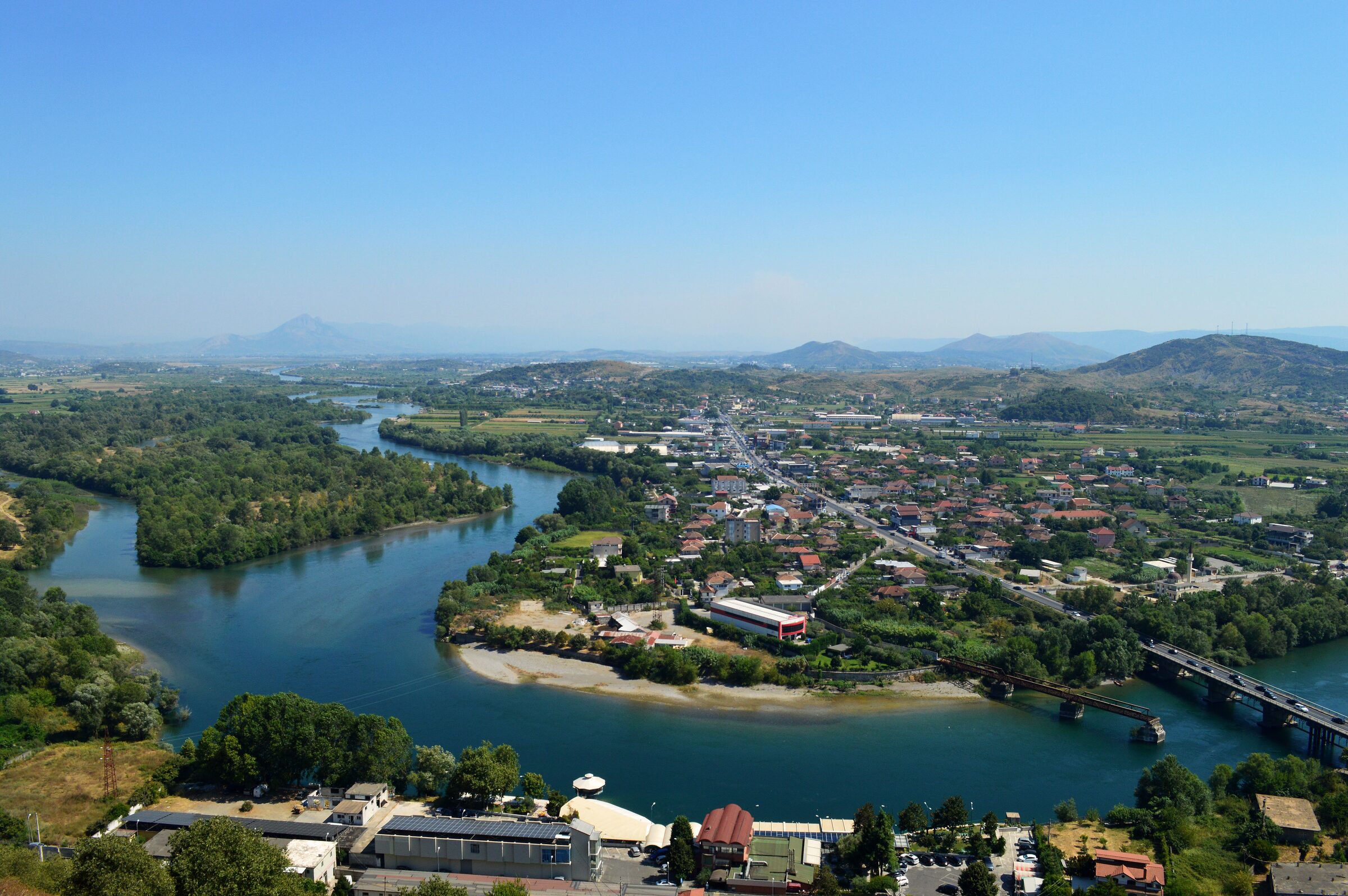
View from Shkodër castle
To get to the northern city of Shkodër, you can either fly
to Tirana airport and get a 2-hour bus trip up the
coast (€15 per person, every 30 mins) or fly to Podgorica in Montenegro
and head south (€18 each, twice daily). I’ve done both and if the price was the
same for flights I’d suggest Tirana because it cuts out a border crossing which
can take a while. Shkodër is built on the beautiful Shkodra lake which
acts as a border between Albania and Montenegro and for outdoor swimmers, it is
a beautiful place to have a dip. We hired bicycles (€5 each, all day, there are
dozens of places to hire
bikes from) and cycled first down to the river and then the famous Rozafa Castle (€5 entry,
per person). The Castle is situated where two rivers (Buna and Drin) meet
before flowing into the lake which provides an incredible panoramic view from
the top worthy of the entry fee alone. Considering the age of the building it
still looks in good shape and has walls and dungeons and all the kinds of
things you’d expect a 3rd Century BCE castle to have (as well as a café
/ shop). We then cycled along the lake front until we found a beautiful spot
and jumped in the emerald-blue 25°C water for a swim which was needed given
that Shkodër’s summer temperature regularly peaks over 33°C.
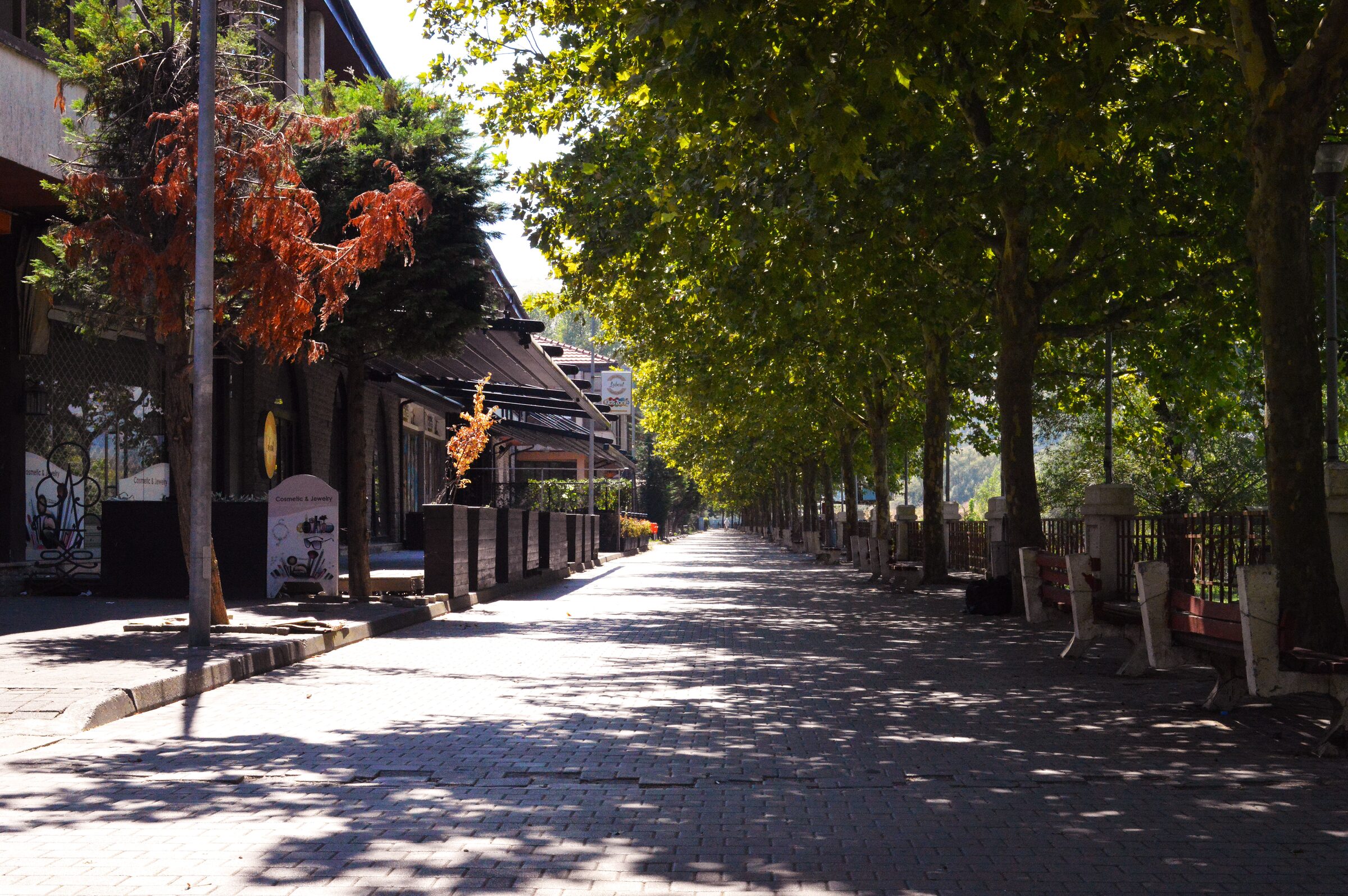
Shkodër cylce path
Shkodër acts as the doorway to Albania’s northern national
parks which are home to one of the best hikes you’ll find anywhere in Europe:
The Valbonë Pass. I have completed this route twice (once in each direction) so
my first piece of advice for anyone wanting to approach this beauty is to start
in Valbonë and end in Theth. It is the same hike either way but starting in
Theth means hiking up a very steep forested area for the first 2 hours which is
best done at the end. However, go whichever way works with your itinerary and
you’ll end up back in Shkodër whatever happens. Whilst the hike itself is only
8-9 hours long, this adventure will take you 3 days in total due to the travel
arrangements needed (below). As we were in Albania specifically for the hiking,
we used the travel company Zbulo who provided
us with all the accommodation for 8 days, OS maps, GPS trackers and food while
we were there which took away the logistical headache for us. You could easily
book the accommodation and organise food for yourself each night if you didn’t
want the support of a tour company, but they did however transfer our
large luggage between accommodation which meant we only needed a day bag whilst
one hikes between villages. You could complete all the hikes in this region as
one-day activities (except the Valbonë Pass) or sort out luggage transfer
yourself when needed.
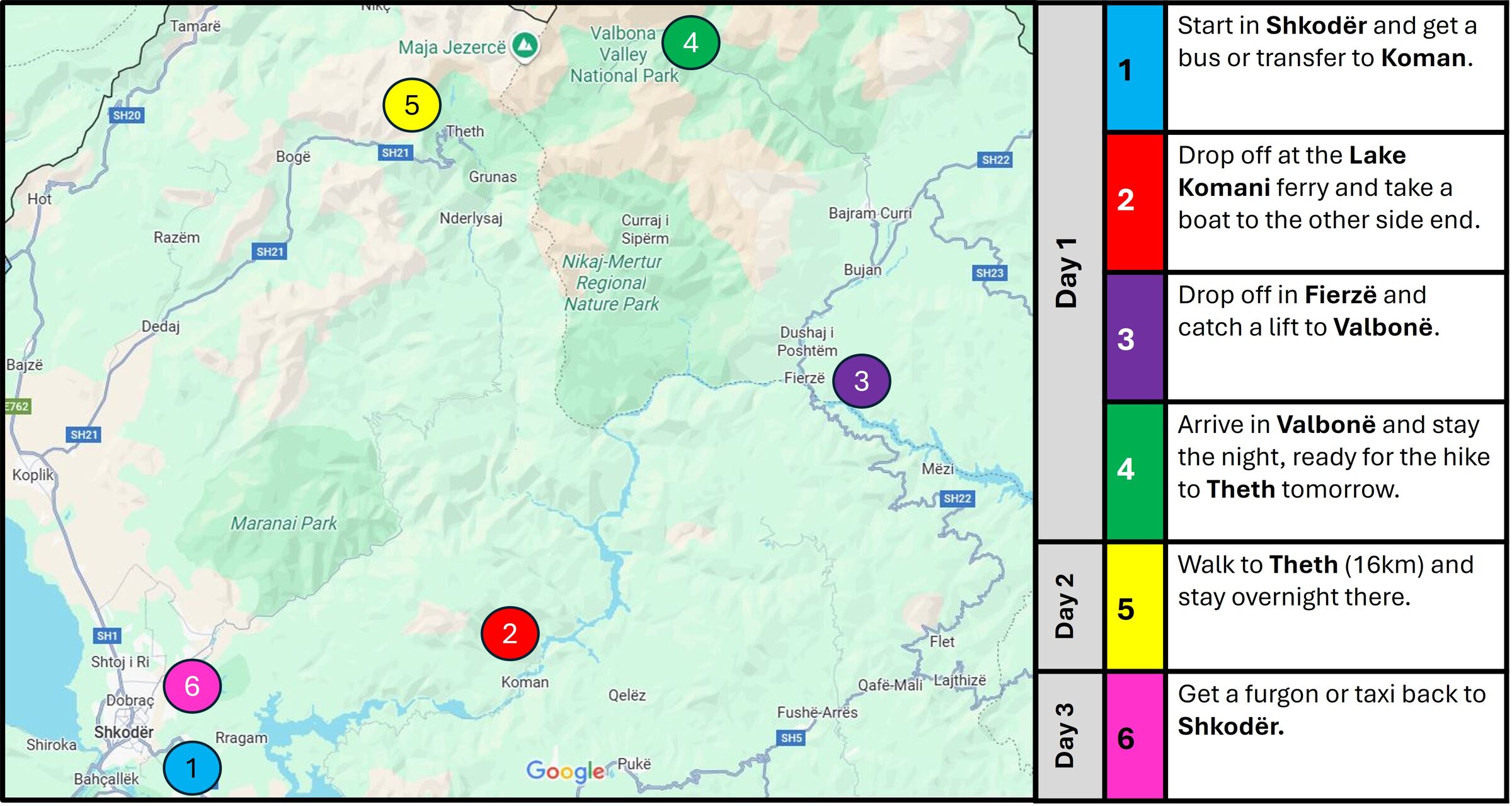
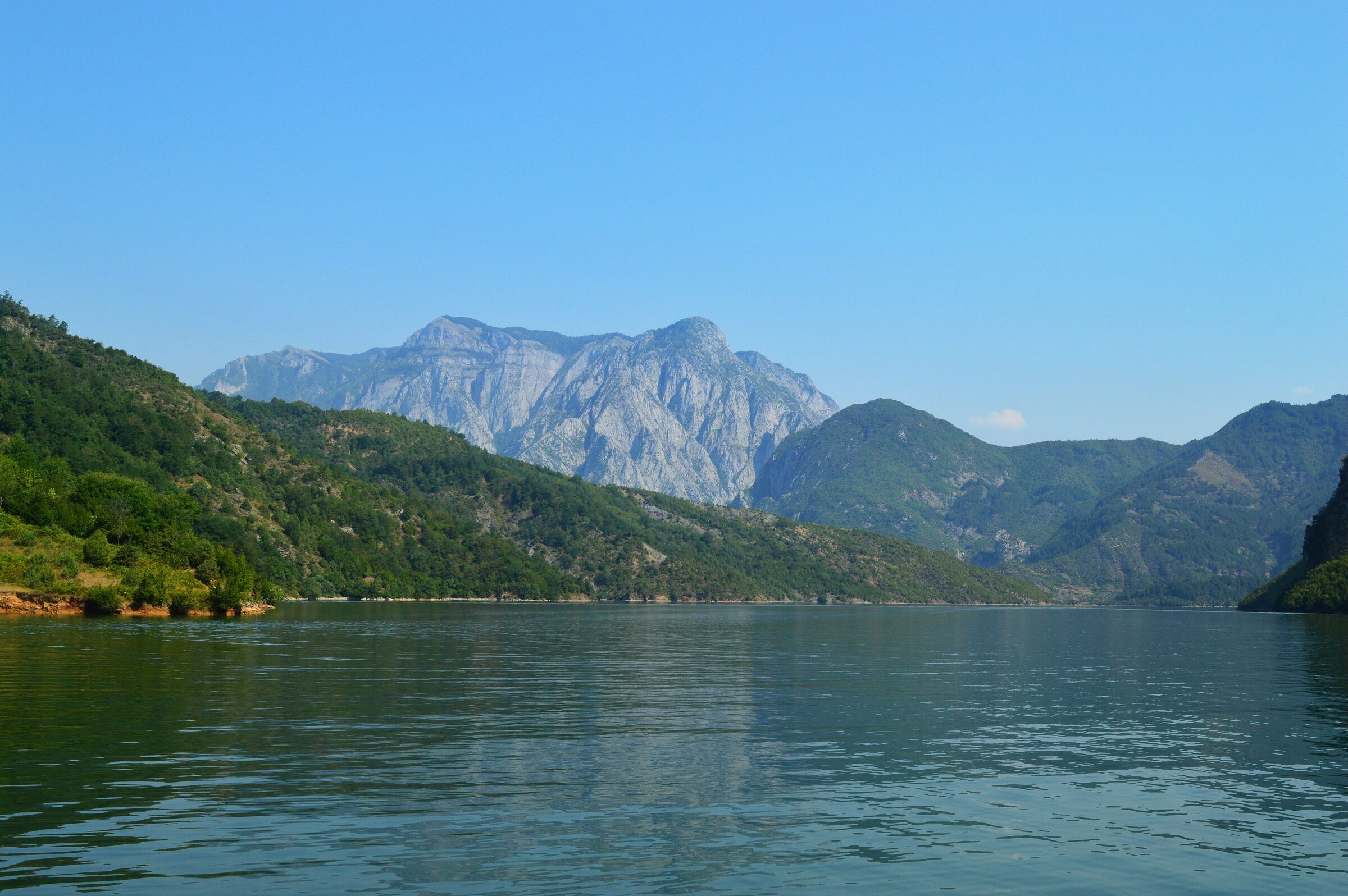
Valbonë Pass walk itinerary Komani Lake from the ferry
Starting in Shkodër, the first thing you need to do is
arrange getting to Fierzë on the other side of Komani Lake. There is no
road between Theth and Valbonë so you’re going to need to sail there! First,
book a bus / pick-up to the lake by going to the large central roundabout in Shkodëror using
one of websites of the many ferry companies that do this daily. We’ve used Berisha Ferries previously but they all
do the same thing, and you can arrange pick up at either side along with the
ferry ticket for €10 each. Once you’re on the boat, you can sit back and enjoy
a genuinely incredibly beautiful journey along the gorgeous fjords and
waterfalls along the Komani Lake which are not too dissimilar from the
Norwegian and New Zealand coastlines. The trip takes 2.5 hours so make sure you
know when you’re onwards travel is booked for. Once you arrive in Fierzë, some sort of bus
or furgon (a minibus) will drop you off at your accommodation hopefully
somewhere near the start of the hike. As we booked our trip with Zbulo, we were
given pre-paid tokens for all our transport which a driver collected and then
drove us onwards. Things like this made it really easy for us so I’d recommend
the 8-day Alps Explorer
by Zbulo as they were really well organised in every element of the journey
and they tailored the whole trip to our needs, dates and interests.
Valbonë Pass hike
The hike (16km, 8-9 hours) starts along a dried riverbed with
really easy to follow signposts which eventually turns in pretty farmland with
cabins and livestock. It is easy underfoot with gradual and differing inclines
as you go and the trail is easy to follow. There are open mountainous meadows
to trek through which eventually give way to a stunning view of the Accursed
Mountains after you make it through the treeline. Make sure you pack sun cream
as a lot of the hike is out in the open after this section. There’s a small café selling cold drinks
and snacks roughly a third of the way through the hike and then another one just after
half way with a beautiful view to accompany your ice cold beer. When you reach
the top of the pass there is a short extra climb you can make which will reveal
the full extent of the fabulous view which is definitely worth it. The views
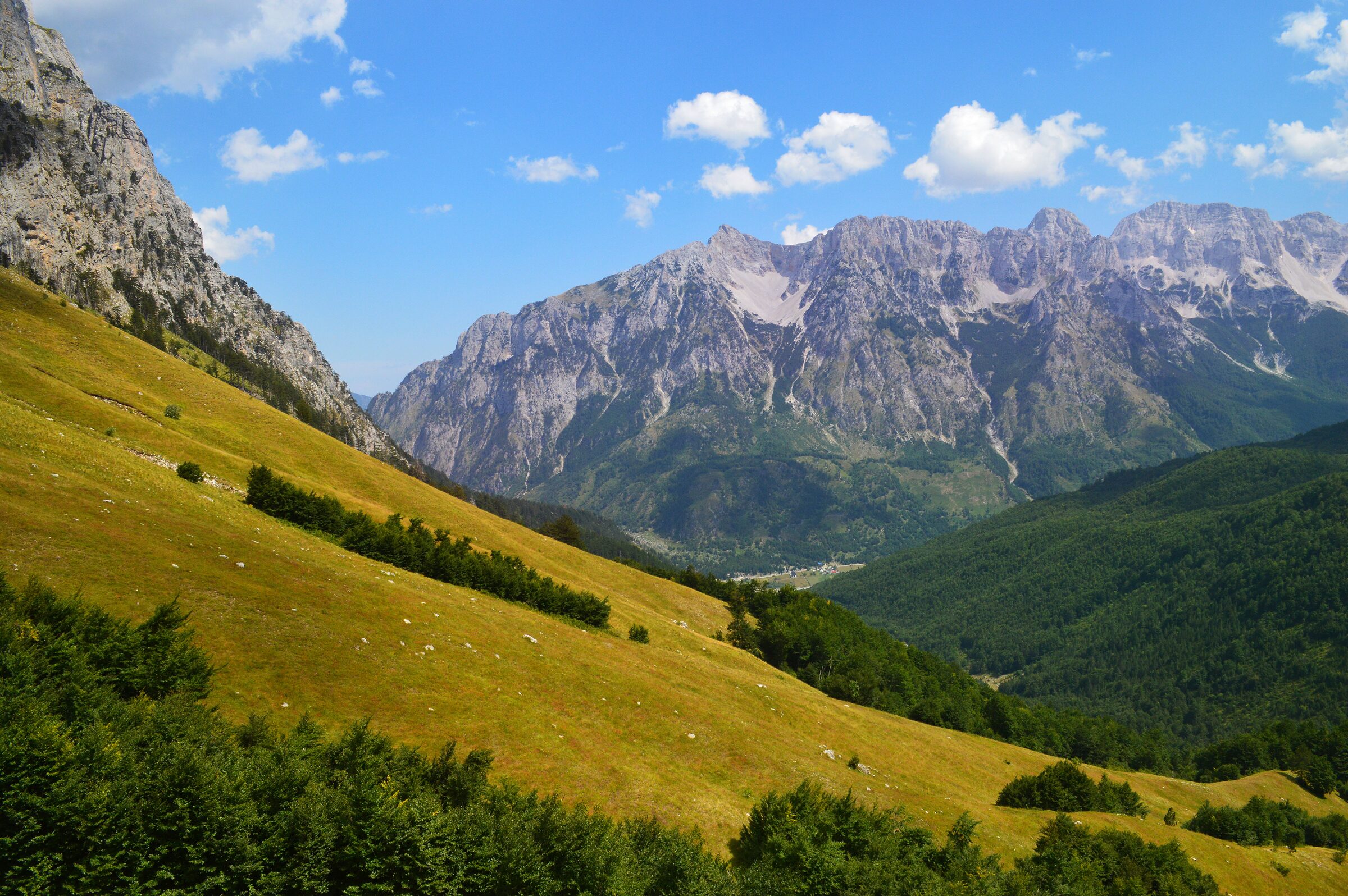
are staggering but my words and pictures don’t do it justice. The blue tinted
Accursed Mountains set against the lush green forests and the shining river
cutting through the valley is one of the best views in Europe. The hike down
towards Theth is just as enchanting with yellow-green fields and blue skies
accompanying you through the rocky landscape. There are small streams to dip
your feet in and drink from as you walk downhill and as you approach the
village; you’ll start to see oddly tall stone buildings with only one or two
windows know as reconciliation towers serving as a place once used to
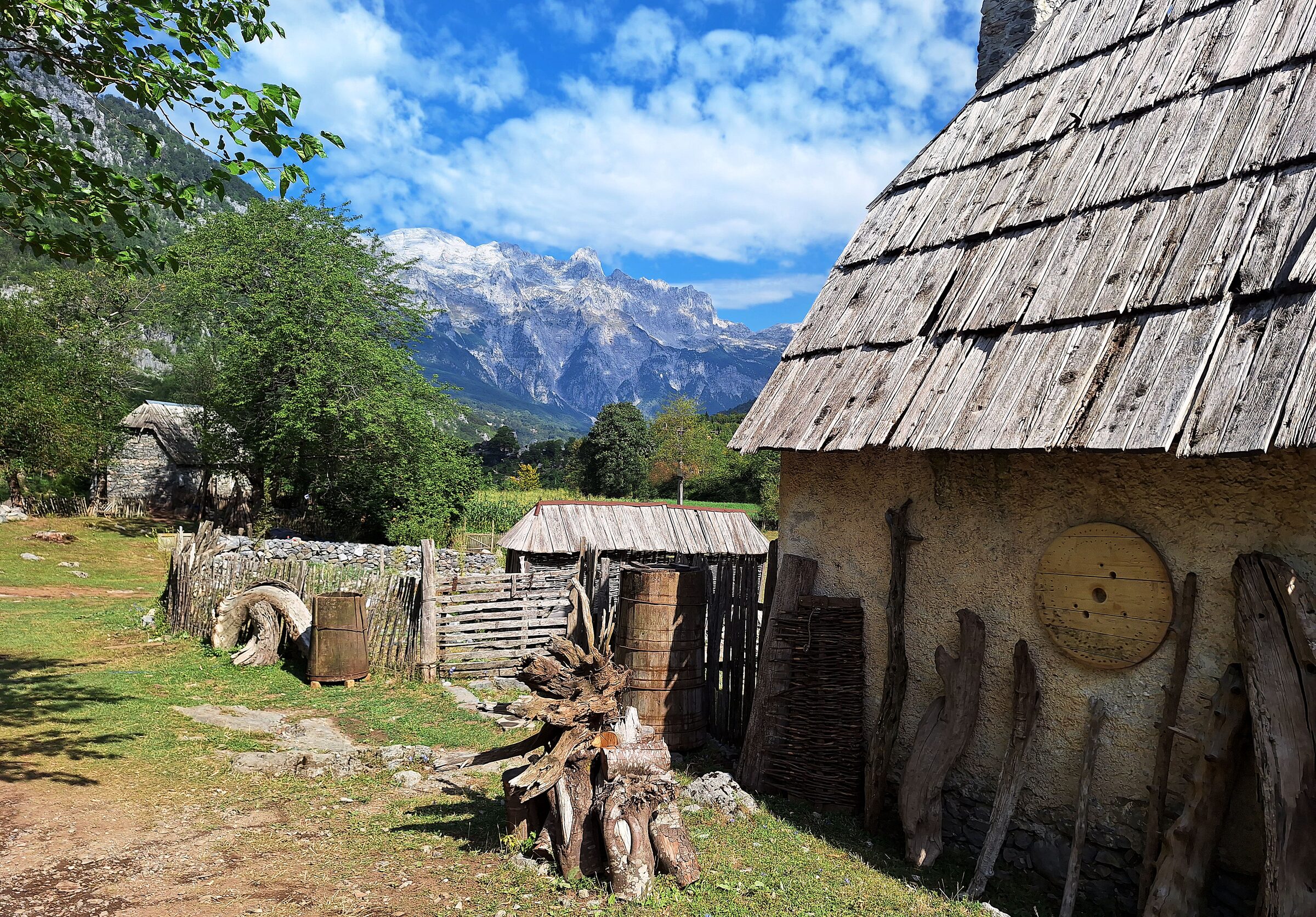
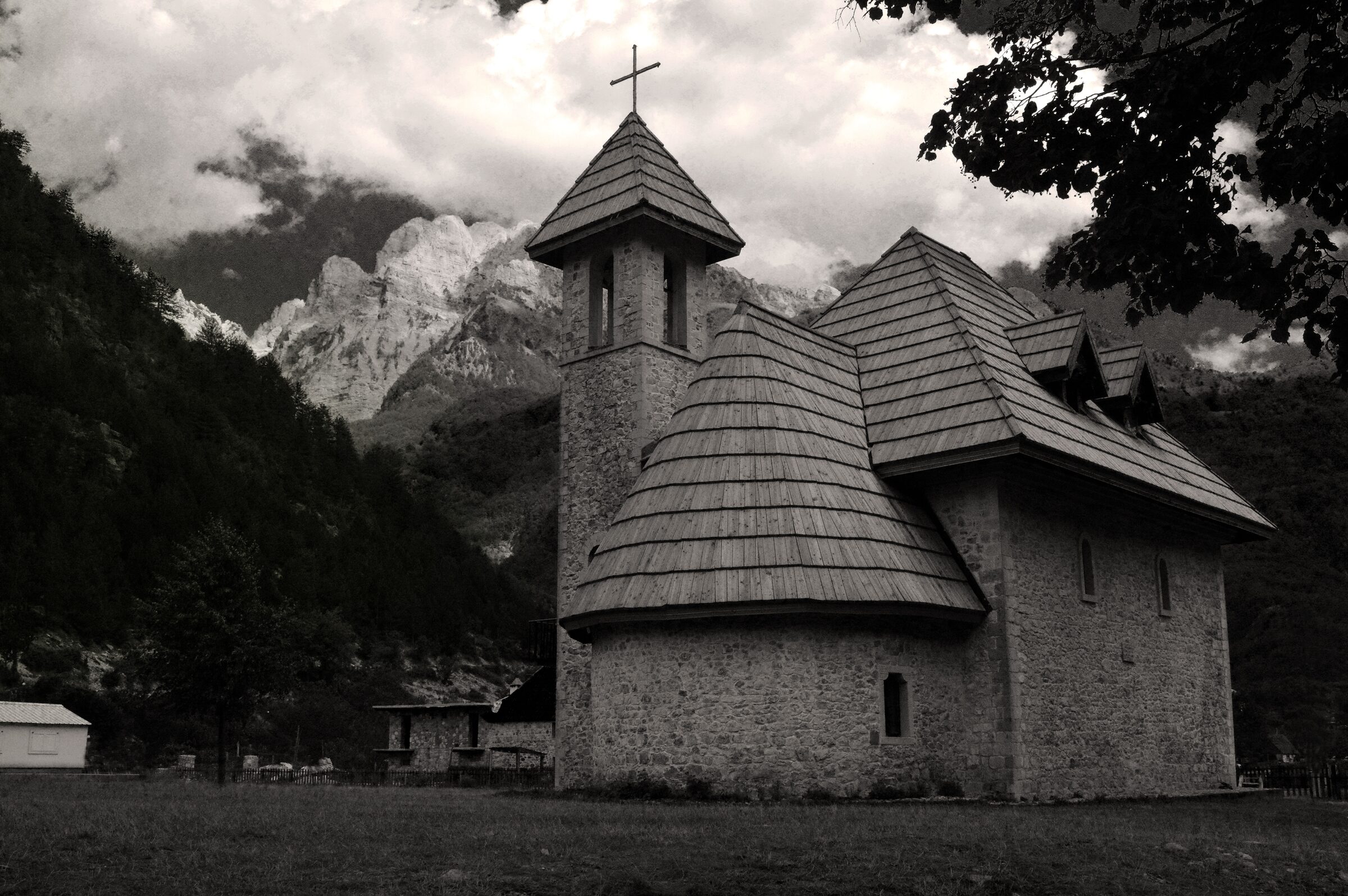
settle conflicts. The charming Kisha e Thethit church is set against the pretty
farmyards and background mountains makes a really alluring landscape and such a
peaceful place to be. More information on this hike can be found here on the top 3 hikes page. If you’re planning on just completing the Valbonë Pass
and then continuing your journey elsewhere; this is where you’d arrange a furgon back to Shkodër, but our 8-day hike continued into the valley so skip
ahead for Tirana but keep reading for the Blue Eye in Theth.
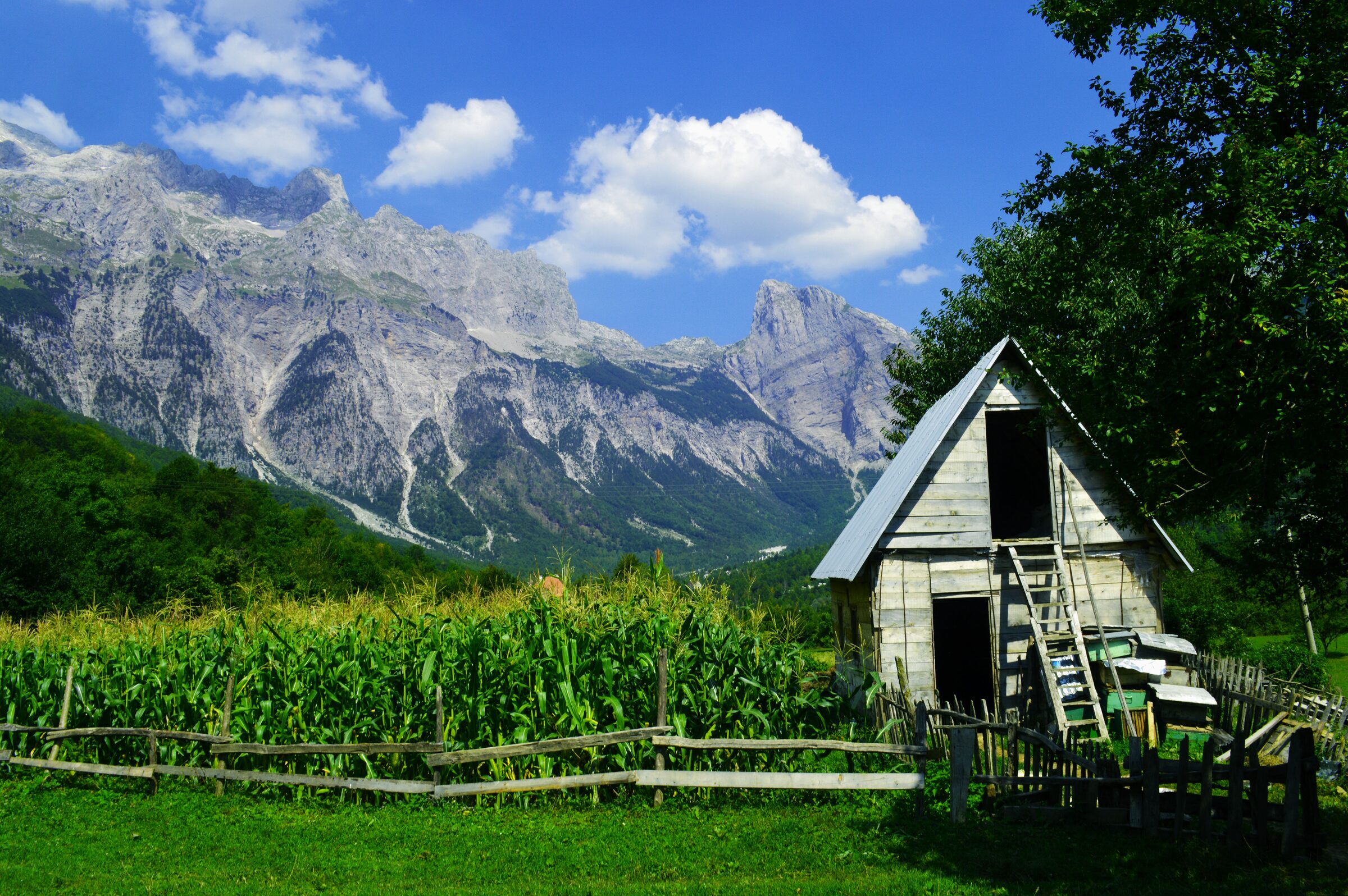
Theth mountain view
We stayed in Theth for a few days and while we were supposed
to complete the 19km hike to Peja Lake and back, I had eaten something which
didn’t agree with me rendering me unable to leave the bathroom for a day, so
instead we continued our scheduled walk to Nderlysaj further south
down the valley the day after. The hike to Nderlysaj was only 7km and followed
a river more-or-less the entire way but was very pretty, nonetheless. The hike
was a nice warm-down from the Valbonë Pass with only 160m incline and
encouraged the occasional dip in the glacial river and waterfall selfie. Travelling
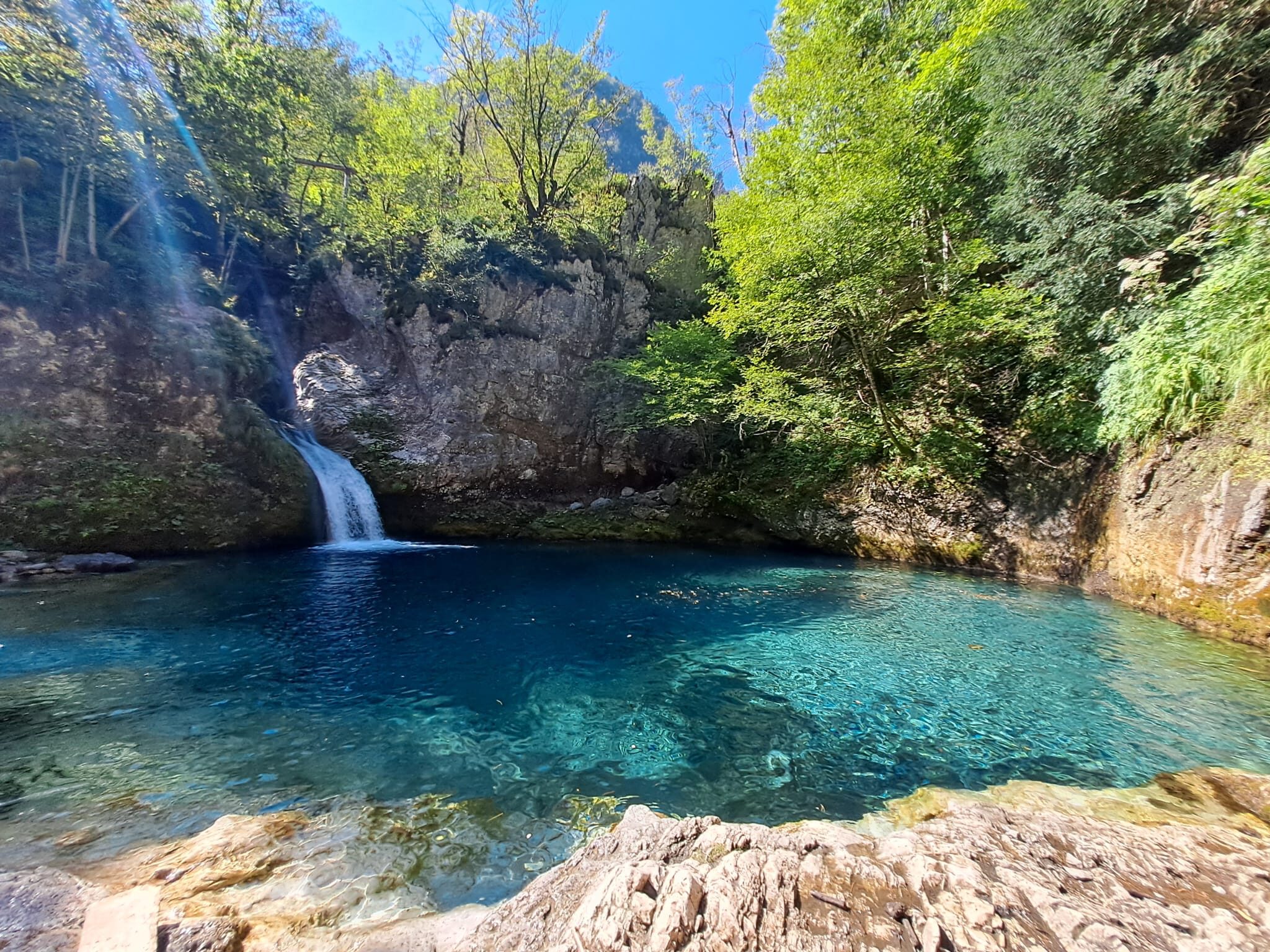
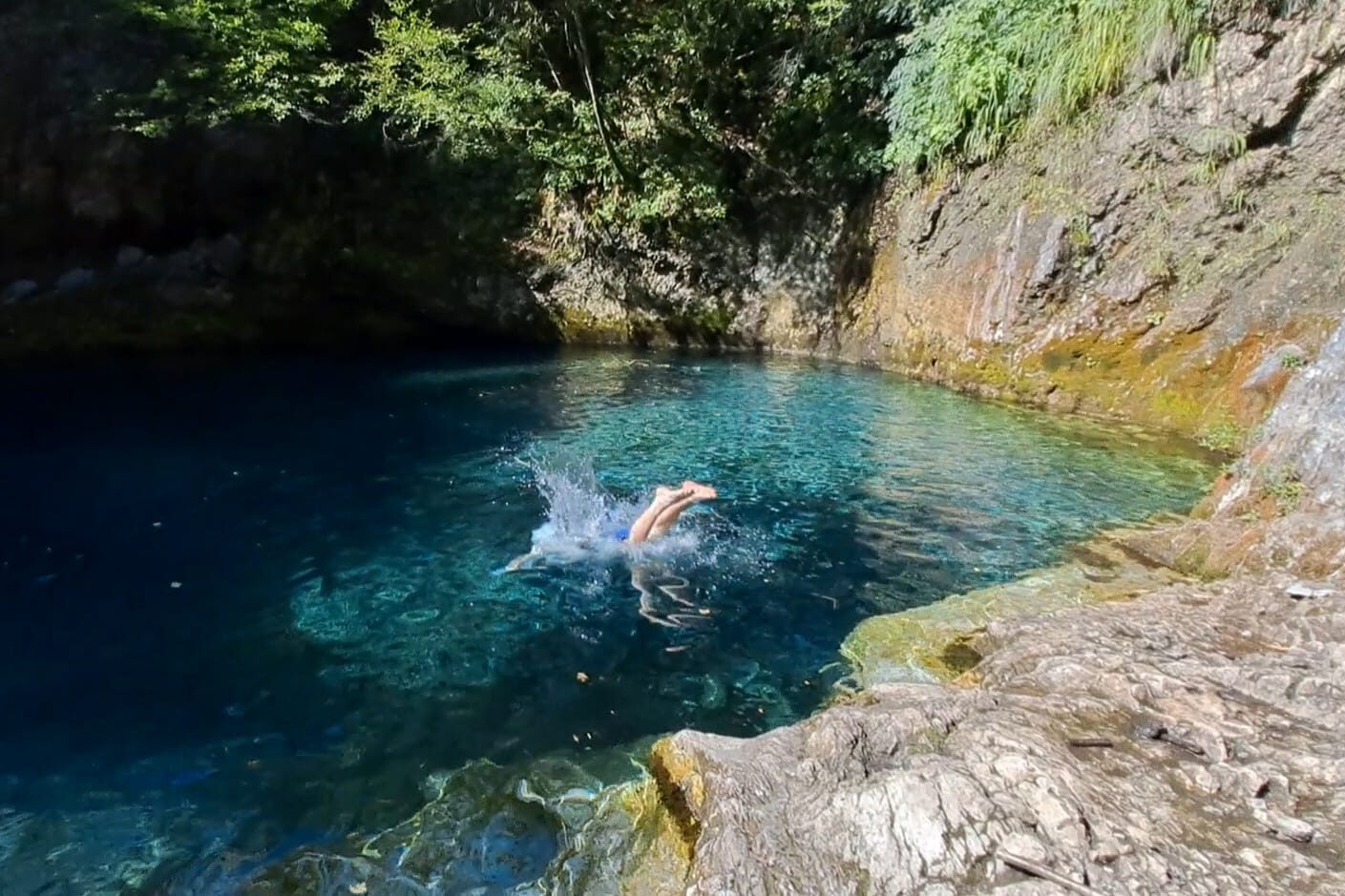
to Nderlysaj is ideal for one thing: a close walk to the Blue Eye, a
staggeringly beautiful circular pool of crystal clear, deep blue, freezing
cold, glacially fed water which is one of the most popular spots in Albania.
Not to be confused with the Blue Eye near Sarandë, this one takes
you on a 6km round trip, ending at the above described, Instagram famous spot
where the water is absolutely freezing but completely worth the dive in. In
2017, I think I saw maybe 30 or 40 people on the entire hike, including at the
pool but in 2024 there were well over 100 people just at the pool itself and we
must have walked past hundreds more. It is becoming more popular (as it would)
so try and get there now before it becomes another tourist hotbed of coaches
full of Instagram selfie snappers. The water level in the river has also
dropped noticeably over the last 7 years, so it might not be around for too
much longer anyway. There are so many other short hikes around the region which
mostly follow a river of some sort, so we spent the last day of our mini
northern Albanian trek following a river somewhere before heading back to
Tirana in a Furgon. Northern Albania is truly
stunning.
Blue Eye, ThethTheth church
Tirana is a colourful city with lots of interesting history.
The centre (Skanderbeg Square) is similar to other ex-iron-curtain-capital-city-centres
in that it has a huge open square with a giant statue in the middle (think
Budapest, Bishkek etc). The centre is host to numerous museums such as the National Historical Museum and the excellent
House of Leaves museum which acted
as the headquarters for surveillance in communist Albania and holds and incredible
array of communist period artefacts and interactive displays (€8 per person). During
the communist regime of Enver Hoxha, there were 750,000 war bunkers built
around Albania but instead of knocking them all down, in 2014 the government turned
some of them into art installations and museums known as Bunk Art (€5 per person) where you
can see historical artefacts from the cold war as well as art installations.
There are a handful of small ones to peek in for free as well, dotted around
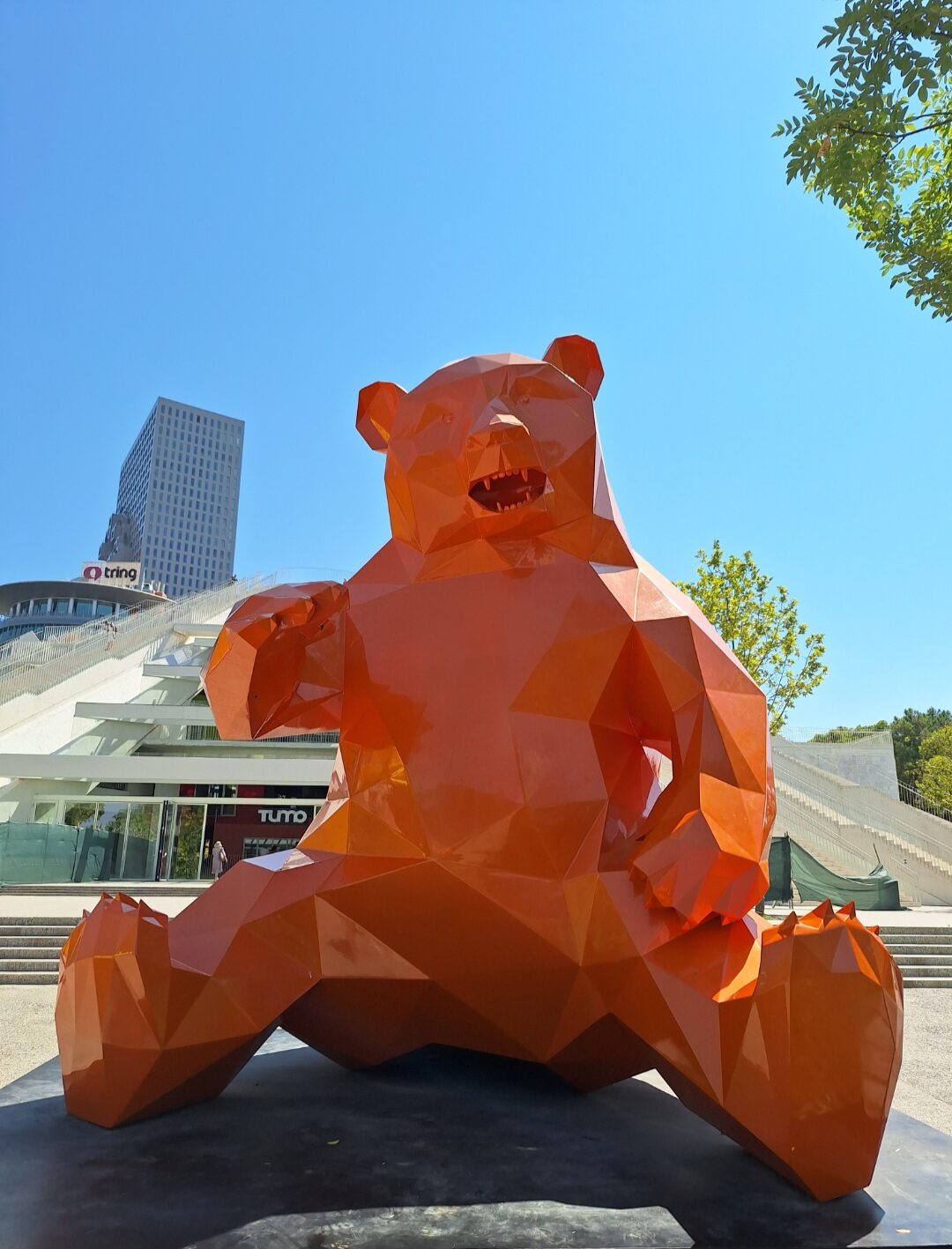
the city. A 10 minute walk south from Skanderbeg Square brings you to the very
odd (and I must add, pretty ugly) Tirana
Pyramid which has had many uses in its time (including a museum and
conference centre) but now seems to act like an anti-tourist trap due to its bizarre
architecture. Just like all capital cities,
there’s religious buildings, statues and bridges to see but Tirana does have
some lovely little cafes, bars and restaurants, especially around the castle area (which has
been pedestrianised) and the large Tirana Lake Park is a lovely way to spend an
afternoon wandering or relaxing in the shade. You’ll need two or three days at
most to fit in all the museums, Bunk Art and sightseeing in Tirana.
Street artTirana pyramid
As you might have expected, Albania has some incredibly beautiful
beaches along the coast and generally speaking the three main places of
interest are Durrës, Vlorë and Sarandë. Durrës is popular due to the proximity
to Tirana, Sarandë has the southern Blue Eye nearby, but Vlorë is the jewel in
the crown. Vlorë is coastal town with stunning beaches, crystal blue water and
the nightlife (I’m led to believe) is lively with bars, restaurants and clubs
for those younger than myself. Sarandë on the other hand has a port for those
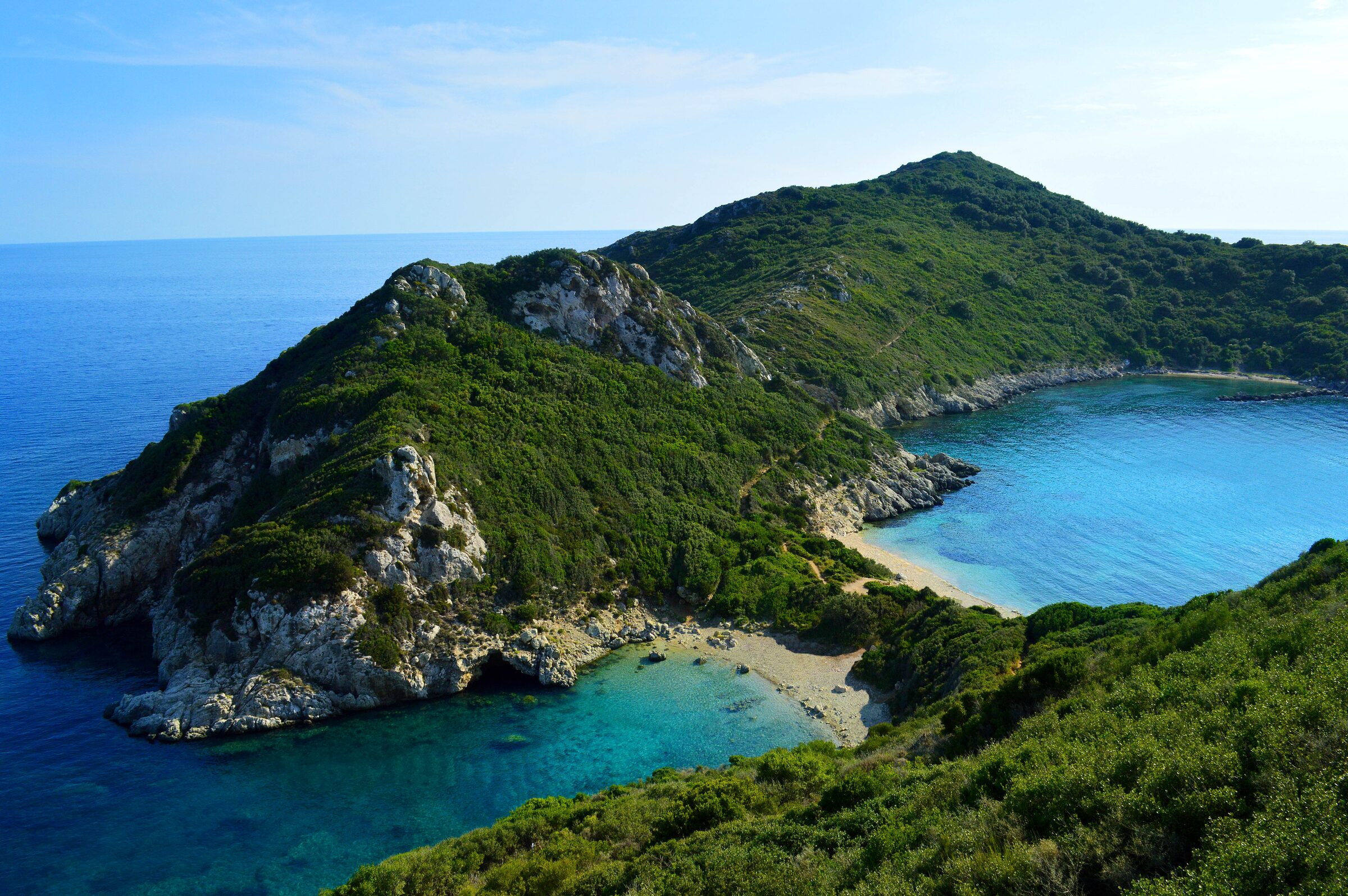
interested in spending a few days on the Greek island of Corfu (daily ferry
for €20 per person) which is both equally very pretty but also a lot more
expensive than anywhere in Albania. Sarandë is also where you can catch the bus (1 hour
journey, €4.50) from to visit the Southern Blue Eye, a small lake with water as
clear as the northern Blue Eye. It is a short walk around the lake with some swimming
and diving spots for those who enjoy freezing cold water.
Beach in Corfu (Greece)
Albanian is geographically, culinarily and historically very
much like Italy, Croatia and Greece but after the end of communism and Yugoslavia;
the development into a tourism hotbed was delayed by the pyramid schemes the
country found themselves in during the 1990s. In the near future, Albania will
the be the destination of choice for so many travellers across Europe so if
you want to get there before everyone else does; do it now! Northern Albania is
incredibly pretty, the infrastructure is improving all the time, and it is
still one of the cheapest places to travel round in Europe. Use our advice or
not, remember: it’s what you know, not who you know.